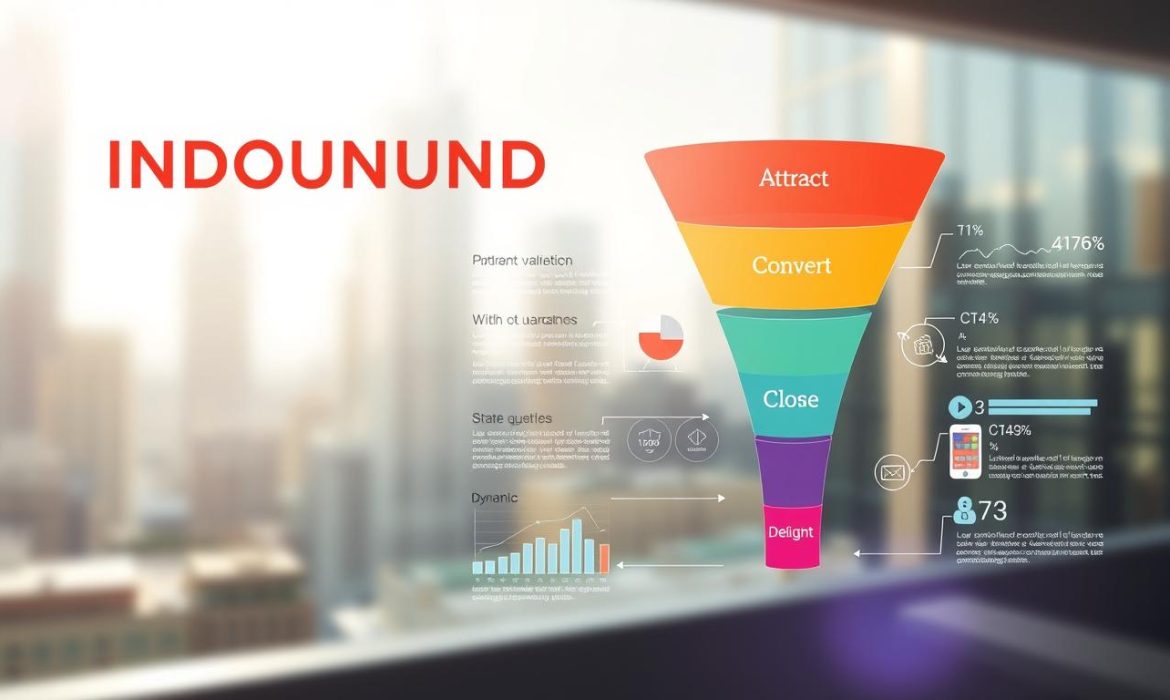
Did you know brands using inbound marketing get up to 10x more leads than those using outbound? In a world where 74% of companies choose inbound, the benefits are clear and growing in the United States.
Section 1 introduces the inbound marketing funnel. It attracts the right people, turns interest into action, and keeps customers coming back. It combines content, SEO, social, landing pages, CRM, and automation into a seamless digital marketing funnel.
Readers will learn how to move from awareness to decision. They will see how customer acquisition techniques can be helpful, not pushy. They will also understand how the inbound sales process builds trust through useful stories and clear offers.
Examples from HubSpot, Old Navy, and PGi show how it works. These examples lead to a system that scales. It improves search reach, strengthens email nurture, and tightens sales handoffs—without waste.
This article is a practical guide. It explains the different stages of the funnel and maps content to each. It also shows how to align teams around shared metrics. The aim is simple: unlock revenue by serving customers first.
With an integrated digital marketing funnel and disciplined customer acquisition techniques, any team can grow. They can turn buyers into lifelong advocates.
What Is Inbound Marketing Funnel and Why It Works Today
The inbound marketing funnel lets people learn at their own pace. It meets their search needs, answers real questions, and guides them with useful content. It’s a way for teams to run a campaign that feels helpful, not pushy.
At its core, it aligns content, channels, and data with how buyers research. Brands like HubSpot, Salesforce, and Mailchimp show how SEO, blogs, and email can move prospects forward. They build trust through an inbound sales process.
Customer-centric marketing that attracts, engages, and delights
This model uses clear, empathetic content to attract, engage, and delight. It combines search-optimized articles, short videos, and helpful tools for self-education. It pairs customer acquisition techniques with lifecycle emails and chat to keep the conversation going.
Each touchpoint adds value. Guides, webinars, and product checklists reduce friction. An inbound sales process picks up signals and responds with timing and relevance.
How inbound differs from outbound in approach and results
Outbound pushes messages through ads and cold outreach. Inbound draws people in with answers they were already seeking. It offers value exchanges, like demos, calculators, and gated resources inside an inbound marketing campaign.
Because content is tailored, customer acquisition techniques become more efficient. Sales teams get context-rich leads from the inbound marketing funnel. This improves handoffs and shortens cycles.
Proof points: 74% of organizations use inbound; higher lead conversion effectiveness
Adoption is broad: 74% of organizations rely on inbound to drive growth. Brands report stronger organic visibility, steadier pipelines, and clearer attribution.
Studies show inbound can achieve a far higher lead conversion rate than outbound. When search, social, and email work together, the inbound sales process captures intent. It turns interest into revenue.
Mapping the Customer Journey Across the Digital Marketing Funnel
Getting the best results means every stage must be clear and connected. Customer journey mapping helps teams align goals, content, and timing. This makes the sales funnel smoother and boosts conversions.
Teams should define moments, messages, and offers for each step, then use CRM data to keep the path consistent across channels.

From awareness to decision to advocacy
Awareness begins with education that solves real problems. Guides and SEO-driven posts help people understand their issues and options.
Decision-making builds trust with proof. Case studies, ROI calculators, and comparisons show results and lower risk.
Advocacy grows through support and ongoing value. Tips, loyalty perks, and referral prompts turn happy buyers into promoters.
Top, middle, and bottom of the sales funnel explained
The top of the funnel attracts learners with simple, helpful ideas. It fuels the inbound marketing funnel by earning attention, not forcing it.
The middle of the funnel serves shoppers who want details. Email nurturing and webinars answer deeper questions and frame fit.
The bottom of the funnel helps buyers act with demos, free trials, and clear pricing. The sales funnel moves faster when steps are obvious and low risk.
Customer journey mapping to personalize content and timing
Customer journey mapping links personas, triggers, and channels so each touch lands at the right time. In the digital marketing funnel, signals like page views, form fills, and demo requests guide the next message.
Dynamic CTAs, segmented emails, and tailored offers keep momentum. The inbound marketing funnel then closes the loop by aligning content with lifecycle stage and feeding insights back to improve the path.
Lead Generation Strategies That Attract Qualified Traffic
A good lead generation strategy uses search, content, and community. It helps people move through the digital marketing funnel. It also brings in steady, qualified traffic to any inbound marketing campaign.
Done well, these lead generation strategies create momentum that compounds with every new visit, share, and sign-up.
SEO foundations: relevant keywords, on-page optimization, and backlinks
Begin with targeted keyword research for product and service pages. Use clear titles, descriptive meta text, and fast page speed. Build internal links to help people and crawlers explore deeper.
Expand pages for each offer and track rankings and traffic. Earn backlinks by working with credible publishers and influencers. Regular blogging, with help from platforms like Moz, keeps content fresh and easy to find.
Content engines: blogs, ebooks, whitepapers, webinars, podcasts
Create helpful content that answers real questions. Blogs increase reach, while ebooks and whitepapers show intent. Webinars and podcasts add a human touch to expertise and support an inbound marketing campaign.
Plan a content calendar that matches topics to buyer pain points. Repurpose one idea into various formats to grow without getting overwhelmed.
Social media distribution to amplify reach and engagement
Share content on platforms like LinkedIn, X, Facebook, Reddit, Instagram, TikTok, and YouTube. Use native formats, clear hooks, and alt text for accessibility.
Enable sharing buttons to ensure articles get seen. Regular posting and conversation boost visibility and move prospects through the digital marketing funnel.
User-generated content and community building for organic growth
Encourage customers to share reviews, photos, and tips. Retailers like Old Navy and Anthropologie show how UGC boosts engagement and email sign-ups.
Highlight real stories, reward participation, and moderate with care. This builds trust and strengthens lead generation strategies, supporting an ongoing inbound marketing campaign.
Conversion Optimization Tactics for Turning Visitors into Leads
Pages, offers, and timing must align to move visitors from interest to action. Strong conversion optimization begins with clear messages and smooth paths. It also includes proof that reduces doubt. These tactics fit the inbound marketing funnel and support sales funnel optimization at every step.
High-converting landing pages with clear value propositions and CTAs
A winning page clearly states the benefit on the first screen. It has a tight subhead and a list that’s easy to scan. Trust badges from brands like Google and concise testimonials reduce doubt.
Use a single goal and a bold CTA. Limit navigation to focus attention and improve conversion.
Lead magnets and form strategies that balance friction and value
Offer ebooks, webinars, or toolkits that solve real problems. Ask only for necessary fields at first. Then, use progressive profiling to gather more information over time.
Pair perceived value with the right level of friction. This boosts lead quality without slowing down, a key part of sales funnel optimization.
MoFu content: case studies, calculators, and detailed guides
Mid-funnel buyers seek proof and numbers. Publish case studies with named clients like Adobe. Include ROI calculators and in-depth guides that compare options.
These assets help prospects move through the inbound marketing funnel. They keep conversion optimization momentum going.
BoFu offers: demos, free trials, and easy purchase paths
Ready buyers need clarity and control. Offer live demos and free trials with clear onboarding. Use checkout flows with digital wallets like Apple Pay and PayPal.
Short contracts, upfront pricing, and instant booking links remove friction. This applies conversion optimization tactics where they matter most.
Tip: Keep messaging consistent from ad to landing page to follow-up. This way, expectations match outcomes.
Marketing Automation and Email Marketing Sequences That Nurture
Nurturing builds trust from first clicks. Marketing automation sends the right message at the right time. It keeps the sales process smooth by following clear rules and respecting timing.
Goal: guide each contact from curiosity to confidence with tailored email sequences and unified records. The focus is on helpful content, not hard sells.

Segmentation and personalization across the inbound sales process
Smart lists split audiences by role, industry, and lifecycle stage. Marketing automation tools personalize content. Platforms like HubSpot and Salesforce Marketing Cloud use dynamic fields and rules to align content.
This approach respects the context of the inbound sales process. A first-time visitor gets a primer, while a repeat reader sees a case study or product comparison.
Triggered email marketing sequences for lifecycle stages
Effective email marketing sequences start from actions like viewing pricing pages or signing up for webinars. Each trigger has a short series with a clear purpose—educate, evaluate, or decide.
Welcome tracks set expectations. Consideration tracks share proof like customer stories and ROI snapshots. Decision tracks invite demos or consultations at a humane pace.
Lead scoring and workflows to prioritize sales-ready leads
Lead scoring blends fit and intent. It uses firmographics, content depth, and recency to score leads. When a threshold is hit, workflows route the record, create tasks, and notify sales.
Negative scoring removes noise from accidental clicks and old addresses. This keeps reps focused, while marketing automation tools nurture leads not yet ready.
Aligning marketing automation with CRM for closed-loop reporting
Connecting automation with a CRM like HubSpot or Salesforce unifies data. Teams see the full path from first touch to closed-won. This enables revenue attribution for email marketing sequences.
Closed-loop reporting fuels better models and forecasts. It tightens the inbound sales process, as every send and visit informs the next step.
| Capability | Why It Matters | How to Implement | Example in Practice |
|---|---|---|---|
| Behavioral Segmentation | Delivers relevance based on actions and timing | Track page views, downloads, and clicks; build smart lists | Visitors who view pricing receive a short comparison guide |
| Triggered Sequences | Meets prospects at key moments across the funnel | Define triggers for signup, trial start, and inactivity | A trial-start trigger sends onboarding tips, then a check-in |
| Lead Scoring | Prioritizes high-intent accounts for faster follow-up | Score fit and intent; set MQL thresholds and decay rules | High-scoring leads create instant tasks for account executives |
| CRM Alignment | Links content engagement to revenue outcomes | Sync fields, lifecycle stages, and deal objects | Email-influenced deals show sourced revenue and velocity |
| Analytics & Attribution | Optimizes spend and messaging with evidence | Use multi-touch models and cohort views | Sequences with product usage tips drive higher retention |
Sales Funnel Optimization and Enablement
When marketing and sales work together, revenue grows faster. Teams that see the sales funnel as one system have better handoffs and clear goals. This approach helps the inbound sales process and boosts conversion at every step.
Shared visibility helps managers spot problems and act. With the same language and metrics, optimizing the sales funnel becomes a regular task, not a one-time effort.
Aligning marketing and sales around shared definitions and SLAs
Agree on what makes a lead qualified and how fast to respond. Define the sales funnel stages and who owns them in the CRM. This way, the sales funnel shows real progress.
Weekly meetings check on lead quality and progress. Quarterly reviews adjust goals and fine-tune the sales process as the market changes.
Sales enablement assets: email templates, product one-pagers, and booking links
Give reps email templates that track performance. Add concise product guides and FAQs from real customers. Keep up-to-date assets for each stage of the sales funnel.
Standard kits help reps get started faster and pitch consistently. Small improvements add up to big changes in the sales funnel.
On-site conversion upgrades: direct calendar booking on pricing and contact pages
Make it easy to book meetings on pricing and contact pages. Track each meeting’s source for clear pipeline views. Tools like CallPage connect leads quickly, moving them through the funnel.
These steps increase form completions and reduce delays. They strengthen the sales process from start to finish.
Using data to refine pitches and shorten time-to-close
Analyze reply rates and meeting success rates. Use CRM data to test and improve pitches. Share content performance to help reps close gaps at each stage.
This approach improves message-market fit and leads to consistent sales funnel optimization.
| Focus Area | Key Action | Primary Metric | Tooling Example | Impact on Sales Funnel |
|---|---|---|---|---|
| Definitions & SLAs | Standardize MQL/SQL and response times | Time-to-first-touch; SQL acceptance rate | HubSpot CRM | Cleaner handoffs in the inbound sales process |
| Enablement Assets | Deploy tracked email templates and one-pagers | Open/CTR; meeting set rate | Gmail + HubSpot Sales | Faster, consistent outreach via conversion optimization tactics |
| On-site Booking | Add direct calendar links on pricing and contact pages | Bookings per session; no-show rate | Calendly | Shorter delay from intent to conversation in the sales funnel |
| Instant Callback | Offer immediate voice connect for hot leads | Connect rate; speed-to-lead | CallPage | Higher live contact and faster qualification |
| Data-Driven Coaching | Review stage conversion weekly; test talk tracks | Stage-to-stage lift; win rate | HubSpot Reports | Ongoing sales funnel optimization grounded in evidence |
Tools Stack for an Inbound Marketing Campaign
A smart stack cuts handoffs, speeds insight, and keeps costs in check. It connects marketing automation tools with CRM, analytics, and creation apps. This way, an inbound marketing campaign can move smoothly from plan to launch.
Choosing the right tools supports lead generation strategies and clear customer journey mapping.
HubSpot for CRM, marketing automation, and reporting
HubSpot brings contacts, deals, emails, and content together in one place. Teams use it for workflows, landing pages, and tracking ads. This helps run an inbound marketing campaign with closed-loop reporting.
It aligns sales and service, making customer journey mapping consistent from start to renewal.
For more on stack selection and adoption trends, check out this overview on top inbound marketing tools. It also talks about how consolidation reduces costs.
SEO and content optimization with Surfer
Surfer helps with on-page updates and keyword research. It lets writers compare drafts and refine headings. This boosts visibility and keeps assets aligned with customer journey mapping.
Social scheduling and analytics with Buffer
Buffer manages planning, publishing, and community replies. Teams test posting times and track reach. This keeps audiences engaged and qualified traffic rising.
Creative production with Canva; work management with ClickUp
Canva offers fast visuals and light video edits for ads, blogs, and email. ClickUp coordinates briefs, calendars, and Kanban boards. Together, they speed up creative cycles and keep lead generation strategies on track.
| Tool | Primary Role | Key Strength | How It Fuels the Funnel |
|---|---|---|---|
| HubSpot | CRM, automation, reporting | Unified workflows and closed-loop data | Connects ads, emails, and deals to power customer journey mapping and reliable attribution |
| Surfer | SEO and content optimization | Content Editor with SERP-aligned recommendations | Improves rankings and intent fit, strengthening lead generation strategies at TOFU and MOFU |
| Buffer | Social scheduling and analytics | Planning, timing tests, and engagement insights | Expands reach, feeds audience data back into marketing automation tools |
| Canva | Creative design and light video | Fast templates for consistent branding | Accelerates asset delivery for an inbound marketing campaign across channels |
| ClickUp | Work management and collaboration | Calendars, Kanban, and automation | Keeps production on track and aligns teams around milestones for customer journey mapping |
Conclusion
The inbound marketing funnel is a winner because it fits today’s buying habits in the United States. People now do their own research, look for value first, and trust what others say. When teams align their content with the attract–engage–delight journey, they see better results than old-school methods.
More and more, 74% of organizations are using inbound marketing. This shows it’s not just a trend but a proven way to grow. It’s flexible and can be measured, making it a smart choice for businesses.
Turning the inbound model into real growth is all about execution. A solid lead generation strategy includes SEO, social media, landing pages, and clear calls to action. It also involves email sequences, CRM visibility, and keeping in touch after a sale.
Brands like PGi have seen big improvements in their webinars. HubSpot’s playbook on gated content shows how offers can convert well. Retailers like Old Navy and Anthropologie use community content to build trust and reach more people.
Having the right tools makes it all work smoothly. Teams plan keywords, publish new blogs, share on social media, and capture leads with valuable content. They use automation and CRM to track progress and help sales teams.
When businesses match their content to the customer’s journey, they see better results. Pairing automation with CRM and Sales helps make sales funnels more efficient. Over time, this leads to better leads, smarter decisions, and loyal customers who keep coming back.
FAQ
What is an inbound marketing funnel and why does it work today?
An inbound marketing funnel is a system that attracts and engages buyers. It uses SEO, social media, and email to guide them. This approach builds trust and improves SEO, making it effective.
How does inbound differ from outbound in approach and results?
Inbound marketing is about providing useful content. It feels helpful and builds long-term relationships. Outbound marketing pushes messages, often seen as disruptive.
Is there proof that inbound works?
Yes, 74% of organizations worldwide use inbound marketing. It can lead to 10x higher conversion rates than outbound marketing.
How do brands map the customer journey across a digital marketing funnel?
Brands map the journey from awareness to advocacy. Each stage has specific content needs. This helps deliver the right message at the right time.
What are ToFu, MoFu, and BoFu?
Top of funnel (ToFu) attracts learners with educational content. Middle of funnel (MoFu) offers comparison guides. Bottom of funnel (BoFu) provides demos and free trials.
How does journey mapping personalize content and timing?
Teams segment audiences and tailor offers. They use marketing automation to send context-aware emails. This boosts engagement and conversion.
What SEO foundations matter most for lead generation?
Start with targeted keywords and on-page optimization. Build topical depth with blogging and internal links. Earn backlinks to grow visibility.
Which content formats fuel sustainable traffic?
Blogs, ebooks, and webinars are effective. Use videos and interactive tools where relevant. Map formats to funnel stages to move prospects.
How should brands use social media for distribution?
Share content across various platforms. Use UTM tracking and test posting times. Encourage conversation to accelerate customer acquisition.
What role does user-generated content play?
UGC builds trust and community. Retailers showcase customer photos and reviews. It turns customers into advocates.
What makes a landing page convert?
A clear value proposition and focused copy are key. Add trust signals and prominent CTAs. Optimize for speed and mobile.
How should teams balance form fields and lead magnets?
Match form friction to perceived value. Ask for fewer fields for low-intent content. Test progressively profiled forms for better conversion.
What MoFu content moves shoppers forward?
Case studies and ROI calculators help prospects evaluate fit. In-depth articles build confidence, advancing them toward BoFu offers.
Which BoFu offers close deals faster?
Live demos and free trials are effective. Add direct calendar booking and fast callbacks to reduce friction.
How do segmentation and personalization improve nurturing?
Segment audiences by persona and lifecycle stage. Personalize content and CTAs. This increases engagement and accelerates movement through the sales process.
What are effective email marketing sequences?
Use triggered welcome, education, consideration, and re-engagement sequences. Time messages to match buyer readiness.
How does lead scoring and workflow automation help Sales?
Lead scoring ranks interest and fit. Workflows route high-scoring leads and alert reps. This boosts response speed and improves pipeline quality.
Why connect marketing automation with a CRM?
Alignment enables closed-loop reporting. Teams see which channels and email marketing sequences produce customers. This refines budgets and forecasts.
How should Marketing and Sales align for sales funnel optimization?
Define shared MQL and SQL criteria. Set SLAs for follow-up and review dashboards together. This improves handoffs and message consistency.
Which sales enablement assets matter most?
Proven email templates and product one-pagers are key. Pair them with booking links to reduce back-and-forth and speed up the customer journey.
Where should direct calendar booking go on the site?
Add it to pricing, Contact Us, and high-intent landing pages. It shortens time-to-close and increases meeting volume.
How can data help refine pitches and shorten cycles?
Analyze engagement data and email performance. Identify content that advances deals. Use A/B testing to improve each touchpoint.
What tools power an inbound marketing campaign end to end?
HubSpot for CRM, marketing automation, and reporting; Surfer for SEO and content optimization; Buffer for social scheduling. Together they streamline inbound marketing.
Why choose HubSpot for marketing automation and CRM?
HubSpot unifies contact data, email, and sales tools. It supports customer journey mapping and attribution, making it easier to scale.
How does Surfer support SEO and content performance?
Surfer analyzes SERPs and optimizes on-page elements. It improves content quality and search visibility, feeding the top of the digital marketing funnel.
What does Buffer add to social strategy?
Buffer streamlines scheduling and collaboration across networks. It ensures consistent distribution, fueling lead generation.
How do Canva and ClickUp fit into the stack?
Canva speeds design for ads and landing pages. ClickUp manages projects and approvals. Together they increase production velocity without sacrificing quality.