
Global ecommerce jumped to about $6.9 trillion in 2024. It’s expected to reach $8.1 trillion by 2026. Social commerce could hit $1.2 trillion by 2025. This growth changes how top online stores succeed.
With income growth and rates easing, shoppers are ready to spend. The best ecommerce businesses are preparing to meet them.
What makes the next successful ecommerce companies different? They focus on the customer, using AI, machine learning, and agile stacks. Think headless commerce and cloud-native apps.
They personalize every step, run A/B tests, and blend global reach with sharp localization. This approach sets them apart.
Mobile is key to growth. U.S. mcommerce is in the hundreds of billions. 5G coverage boosts real-time data for smarter journeys.
TikTok’s U.S. ecommerce push makes social discovery a checkout lane. Expect top ecommerce businesses to focus on personalization, speed, and trust.
This guide highlights the top online stores and best ecommerce businesses for 2026. They turn personalization, speed, and trust into loyalty and higher revenue.
Overview of the Ecommerce Landscape
The ecommerce market is growing fast and focusing on the customer. Leading online retailers and brands are making shopping smooth across different platforms. Now, shoppers want quick delivery, clear prices, and good service from top ecommerce websites.
Current Trends Shaping the Industry
Personalization is becoming a must-have. Brands use AI and automation to offer personalized content in real time. They constantly test and improve their messages across various channels.
Brands are now reaching out globally while keeping local touches. They adapt to different languages and cultures. Social commerce and SMS help leading online retailers connect with customers better.
Key Statistics and Market Growth
Ecommerce sales worldwide are expected to jump from $6.9 trillion in 2024 to $8.1 trillion in 2026. The retail share has grown from 14% in 2019 to over 22% in 2023. North America alone has millions of businesses competing.
Some categories, like electronics and home improvement, are growing fast. U.S. furniture ecommerce has seen a big jump. Brands that focus on top ecommerce platforms and top ecommerce websites are doing well.
Impact of Technology on Ecommerce
Generative AI is helping with content, translation, and chat at a large scale. It boosts productivity for teams. 5G is making data, inventory, and customer service better across the supply chain.
Social apps are now linked to checkout, with billions using them every day. Starbucks shows the power of omnichannel loyalty. Brands using AI for recommendations or styling are seeing better engagement. These tech advances help leading online retailers turn interest into action on top ecommerce websites and top ecommerce platforms.
Emerging Ecommerce Platforms in 2026
Today’s shoppers want fast, trustworthy, and delightful online experiences. The leading ecommerce platforms for 2026 will offer flexible technology and simple designs. They will aim to match the best online shops and reach of top ecommerce websites, driving growth.
Innovations in User Experience
Headless commerce and API-first stacks enable quick updates and testing. They allow for scaling across different platforms. Cloud-native builds also reduce downtime and ensure fast page loads.
AI-driven personalization goes beyond simple recommendations. It includes dynamic bundles and localized content that change in real time. A/B testing across various channels keeps the user experience sharp.
With 5G, online experiences are getting richer. Features like AR try-ons and instant language changes make shopping smoother. This leads to easier purchases on top ecommerce websites.
Popular Platforms to Keep an Eye On
Shopify is a favorite for entrepreneurs with its vast app ecosystem. It offers tools for print-on-demand, dropshipping, and subscriptions. This makes it a top choice for quick launches and growth.
BigCommerce is known for its headless builds and enterprise features. WooCommerce provides WordPress flexibility with strong SEO capabilities. Adobe Commerce (Magento) supports complex catalogs and global rollouts.
Social commerce is growing fast. TikTok’s U.S. ecommerce launch includes in-app checkout and creator-led bundles. These features push online shops to blend content and commerce, keeping up with the times.
| Platform | Core Strength | Key 2026 Feature | Ideal Use Case |
|---|---|---|---|
| Shopify | Massive app ecosystem and easy setup | Headless storefronts with AI personalization | DTC brands scaling fast with subscriptions and social sales |
| BigCommerce | Enterprise-grade flexibility | API-first omnichannel with native B2B tools | Mid-market to enterprise seeking multi-store and multi-region |
| WooCommerce | WordPress integration and SEO control | Lightweight headless via REST APIs | Content-led sellers who want tight CMS control |
| Adobe Commerce (Magento) | Complex catalog and rules engine | Composable services for global scale | Enterprises with custom workflows and large teams |
| TikTok Shop | In-app discovery and creator commerce | Live shopping with instant checkout | Social-first brands aiming for rapid product drops |
As these platforms evolve, merchants can compare themselves to the best. They can also learn from top ecommerce websites. With the right approach, any store can become one of the best online shops for 2026.
Best Ecommerce Businesses to Follow
The best ecommerce businesses are known for their scale, trust, and storytelling. They lead the way for top online stores. They show how to turn visitors into loyal customers. Here’s who you should keep an eye on.
Market Leaders: Amazon and Shopify
Amazon is all about convenience with fast delivery and a huge selection. It’s always testing new ways to make shopping easier and faster.
Shopify helps millions of brands grow online with a smooth checkout and lots of integrations. Its stores show how to grow big without losing your unique voice.
Disney links its streaming service to exclusive shopDisney drops. This shows a new path for ecommerce businesses.
Niche Players Making Waves
American Eagle uses TikTok to turn trends into sales. Ulta Beauty sends timely SMS to highlight events and deals. These strategies help them stand out.
Pako Lorente uses AI to boost upsells. Pulp & Press educates customers after a purchase to increase satisfaction. Livrarias Curitiba grew by 200% with email automation. These brands are worth watching.
They all follow a simple plan: meet shoppers where they are, guide them, and keep things easy. This is key for top online stores.
Sustainable and Ethical Brands
Teemill has a circular model with QR returns and recycling. With more shoppers choosing green options, this approach is becoming mainstream.
Brands investing in ESG see better loyalty. The best ecommerce businesses make sustainability a core part of their business. This is a trend among top online stores and retailers.
Strategies for Success in Ecommerce
What makes top online stores stand out is a clear plan. They mix sharp storytelling with data. Top businesses use quick tests to improve every touchpoint, then scale what works.

Effective Marketing Techniques
Use AI to segment emails, SMS, and web to match intent. Map campaigns to funnel stages like abandoned carts and birthday offers. Brands like Mobile Fun have seen A/B tests boost open rates and clicks.
Localize timing and copy by country and time zone to boost engagement. Rotate creative, headlines, and calls to action. This keeps costs down while raising lifetime value.
Importance of Customer Engagement
Turn buyers into fans with post-purchase care. Share how-to guides and setup tips, like juice brand Pulp & Press does. Add rewards like Starbucks to nudge repeat orders and bigger baskets.
Meet shoppers where they are. American Eagle uses social commerce to continue the journey after the first click. As TikTok shopping grows, businesses that engage fast and reply in-thread win attention and trust.
Optimizing Supply Chain Management
Use AI to forecast demand and place inventory near buyers. 5G and IoT tracking give real-time views of orders. This helps teams prevent delays and stockouts. Faster last-mile delivery turns first-time shoppers into loyal customers.
Share delivery milestones through email and SMS to lower support tickets. Clear windows, precise ETAs, and easy re-routing protect margins. These moves help top online stores keep promises during peak seasons.
| Tactic | Why It Works | Real-World Signal | Impact on KPIs |
|---|---|---|---|
| AI Segmentation + Omnichannel | Targets intent across email, SMS, and web | Mobile Fun’s winning email tests improved opens | Higher open and click rates; lower CAC |
| Localization by Time Zone | Sends at peak local hours with tailored copy | Customized bodies beat generic versions on opens | Better engagement; more revenue per send |
| Loyalty and Education | Keeps customers active after purchase | Pulp & Press guides; Starbucks rewards | Higher repeat rate; improved CLV |
| Social Commerce Follow-Through | Converts discovery into in-app sales | American Eagle leverages TikTok and IG | More assisted conversions; stronger ROAS |
| AI Forecasting + IoT Tracking | Places stock smartly and speeds delivery | 5G sensors cut delays and stockouts | Lower OOS rate; faster last-mile times |
Bottom line: when successful ecommerce companies align marketing, engagement, and logistics, they move faster than the market. That is how top ecommerce businesses become enduring top online stores.
The Role of Social Media in Ecommerce
Social platforms now shape how we find products, build trust, and make purchases. The top ecommerce websites, leading online retailers, and best online shops use short videos, social proof, and native carts to boost sales.
Smart teams bridge social and owned channels. They capture emails from reels and lives. Then, they send reviews and timed discounts to close the sale.
Platforms Driving Sales
Social media has 5.24 billion users as of January 2025. With such a large audience, the top ecommerce websites meet shoppers where they scroll.
- TikTok: U.S. in-app shopping launched in 2023 and keeps expanding. Its ads are 23% more memorable than TV and 13% above other digital video.
- Instagram: Shoppable posts and Reels power rich catalogs. American Eagle shows how tags and creator clips lift intent.
- Facebook: Shops and Marketplace reach broad age groups, useful for electronics and home decor.
Social commerce is on pace for $1.2 trillion by 2025. In the U.S., adoption trails China but rises fast in clothing, electronics, and home decor. The best online shops streamline checkout to reduce drop-off.
Influencer Marketing Trends
Micro‑influencers drive 60% higher engagement and convert at about 1.46%, beating larger accounts near 0.61%. For leading online retailers, this means better ROI with niche authority.
- Use layered casts: creators for reach, micro‑influencers for conversion, employees for trust.
- Blend formats: short video for awareness, carousels for specs, lives for Q&A.
- Track assisted sales with unique codes and post‑click email flows.
Pair creators with social proof on product pages. The top ecommerce websites that mirror influencer content on-site see smoother jumps from discovery to purchase.
Building Community and Brand Loyalty
Nearly 80% of people say their most important group lives online. Communities make the best online shops feel personal and reduce reliance on paid ads.
- Host member spaces on Instagram Close Friends, Discord, or Facebook Groups.
- Reward actions, not just spend—reviews, UGC, referrals—like the flywheel seen in Starbucks Rewards.
- Offer early drops, waitlist perks, and localized events to deepen ties.
When leading online retailers mix loyalty perks with creator storytelling, advocacy grows. That cycle feeds reach on TikTok and Instagram while building owned lists for long-term value.
Mobile Commerce: A Growing Trend
Now, people can browse, compare, and buy on their phones in seconds. The best online stores focus on fast loading, easy navigation, and mobile-friendly design. They treat mobile as the main screen, not just a smaller version of the desktop.
Speed and clarity win on small screens. They use short menus, big buttons, and clear product cards. Prices are easy to see, and adding to cart is quick, keeping shoppers moving.
Impact of Mobile Optimization
Fast networks in many U.S. cities make pages load quicker. This means better visuals, instant search, and updates. With faster pages, fewer people leave without buying, and more items get added to carts.
SMS is quick, timely, and close to when people want to buy. Stores like Ulta Beauty send texts for special deals and events. These texts have short links to mobile-friendly pages, making it easy to buy.
Adding personal touches helps too. Showing items you’ve looked at, local items, and special offers makes shopping more relevant. On top ecommerce platforms, this personal touch boosts sales without slowing down the site.
The Rise of Mobile Payment Solutions
Wallets like Apple Pay, Google Pay, and PayPal make checking out faster. They’re built into apps and social media, making it easy to buy. TikTok shows how native checkout can make buying simple.
Reliability is important at the end. Strong networks and AI help with quick authentication and fewer payment failures. This makes the checkout process safer and faster, perfect for scaling on top ecommerce platforms.
Keep the checkout process simple. Show clear totals, ask for fewer details, and be kind when there are errors. When the payment screen is trustworthy and fast, customers will return. Mobile becomes their go-to choice.
How to Identify a Profitable Niche
Start by looking for clear signs of demand. Check out Amazon Best Sellers and trending categories on Shopify. Also, try low-risk models like dropshipping and print-on-demand to test your ideas quickly.
The best ecommerce businesses and top ecommerce websites use small pilots to check if their ideas work before they scale up.
Look for recurring needs. Areas like groceries, personal care, and household goods often get repeat orders. Brands like Fresh Patch show how meeting basic needs can lead to more subscription sales. Aim for simple value, reliable supply, and prices that compete with the best online shops.
Tip: Compare seasonality, margins, and shipping weight. Choose items with steady demand, durable packaging, and clear benefits. Keep your copy short, visuals sharp, and delivery times honest.
Market Research Techniques
Use marketplace data to validate your ideas. Track search volume, study review trends, and check return rates. Also, listen to social media to find out what customers are talking about.
Run small tests to learn fast. List a few items, try bundle pricing, and compare how different channels perform. The best ecommerce businesses start small and adjust based on real data from top ecommerce websites.
- Use Amazon Best Sellers to confirm momentum.
- Test dropshipping or print-on-demand to cut risk.
- Pilot subscriptions in categories with regular use.
Analyzing Consumer Behavior
Focus on behavior, not just demographics. Price-conscious shoppers look for discounts and bundles. Impulsive shoppers are drawn to limited editions and timely product drops.
Use all channels to track customer behavior. Send emails, app notifications, and social media messages to guide them through your funnel. Use reminders, back-in-stock alerts, and personalized recommendations, just like the best online shops.
- Offer value packs for budget-driven buyers.
- Announce limited stock for urgency-driven buyers.
- Use clean visuals and short copy to reduce friction.
Leveraging Data Analytics
Use AI for text and sentiment analysis to understand reviews and chats. Personalize your landing pages and emails based on segment, time zone, and device. Fast feedback from 5G and IoT data helps refine your offers in days, not months.
Localize your offerings when demand is high in certain areas. Many marketers translate content to match regional intent. Niche geo plays can increase conversion for top ecommerce websites. The best ecommerce businesses align their send times, product names, and sizing with local norms, keeping up with the best online shops across regions.
| Signal | Why It Matters | How to Measure | Action to Take |
|---|---|---|---|
| Marketplace Velocity | Shows real buying trends | Sales rank, review count growth | Prioritize SKUs with rising rank |
| Subscription Potential | Predictable, repeat revenue | Reorder rate, churn, pause rate | Bundle refills; offer loyalty perks |
| Behavior Segments | Sharper targeting and offers | Click paths, promo response | Build discounts vs. limited drops |
| Sentiment Signals | Uncovers product gaps | AI review scoring, CS tickets | Fix top issues; update PDPs |
| Localization Fit | Higher engagement by region | Open rate by time zone, CTR | Schedule sends; adapt copy |
The Importance of Customer Service
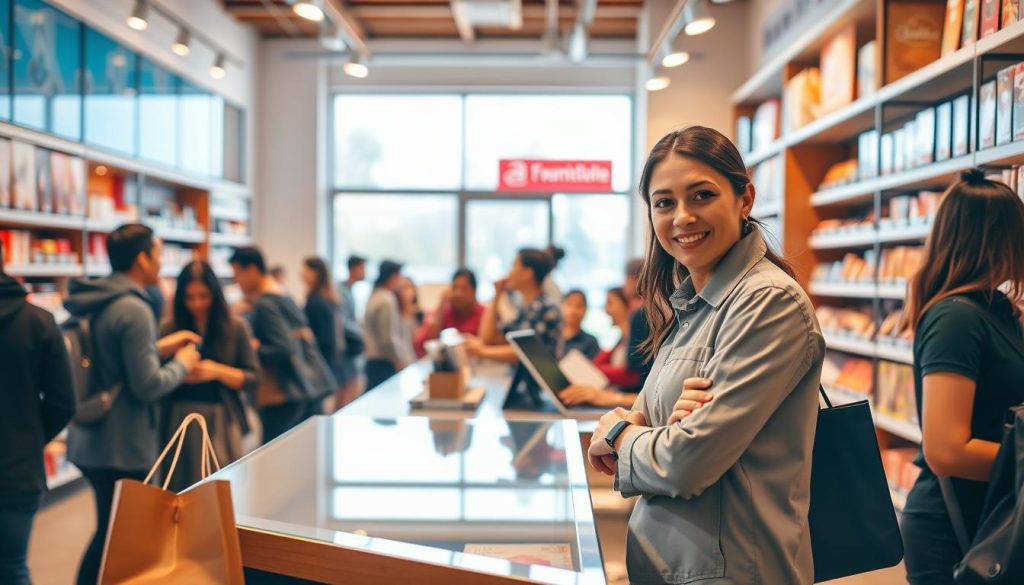
Great service makes first-time buyers loyal fans. Top online stores and ecommerce leaders build trust with quick, clear answers and follow-up. They use these moments to make shopping smoother and build loyalty.
Providing a Seamless Experience
Customers shouldn’t have to repeat themselves. Support across email, live chat, phone, and social media keeps the experience smooth from start to finish. Brands like Starbucks show how a consistent look and tone make every interaction feel right at home.
Email is becoming a key support channel, paired with live chat for fast help. After a purchase, messages with tips and setup guides ease worries and reduce returns. Top online stores plan these steps to ensure help arrives before issues arise.
Small wins add up: clear updates, easy returns, and a human touch when needed. Top ecommerce businesses use short surveys and clear FAQs to spot and fix issues quickly.
Using Technology to Enhance Support
Automation is speeding up, with more brands investing in AI by 2026. Smart routing and AI assistants help agents focus on tough cases and test replies to improve service. Successful ecommerce companies mix bots and humans for the best results.
5G and IoT give support teams real-time data on orders and delivery status. Generative AI provides quick, accurate answers and proactive outreach when needed. Top online stores link these tools to CRM and help desks for seamless support.
When technology works well, customers feel heard. Top ecommerce businesses track first-contact resolution, response time, and sentiment to improve what customers notice.
Innovations in Payment Solutions
Payments are changing fast, moving to mobile, social, and in-app flows. Top ecommerce sites and online stores are testing new ways to make payments smoother and more accepted. They use modern platforms to add new payment methods without a big rebuild.
Speed and trust are now table stakes. New tools let merchants try out wallets, tap-to-pay, and local options quickly. This speed helps with sales across borders and makes finance work easier.
Cryptocurrencies and Blockchain
Some retailers use stablecoins for quicker payments and lower fees. Nike and Shopify merchants, along with some on Coinbase Commerce, accept crypto. Blockchain can also help with cross-border orders by reducing chargebacks and delays.
Stablecoin payouts and tokenized rewards offer new ways to reward customers. When used with the right platforms, these tools fit into fraud checks and tax rules. It’s important to clearly explain fees and refunds to shoppers.
Buy Now, Pay Later Options
BNPL from Klarna, Afterpay, Affirm, and PayPal Pay in 4 boosts sales and order value. Short-term plans fit well with social checkout and mobile carts. Returns are easier when BNPL works with order management and chat support.
Merchants can test offers based on basket size, category, and risk on top platforms. Clear terms and soft credit checks reduce complaints. Real-time risk scoring keeps approvals high and losses low.
| Method | Primary Benefit | Best Use Case | Integration Notes | Brands/Providers |
|---|---|---|---|---|
| Stablecoin Payments | Faster settlement, lower fees | Cross-border and high-value orders | Enable via gateways like Coinbase Commerce; map refund logic | Shopify merchants, Coinbase Commerce |
| Crypto Loyalty/Tokens | Engages superfans, portable rewards | Limited drops, membership perks | Sync wallet IDs with CRM; educate on redemption | Nike .SWOOSH, Starbucks Odyssey |
| BNPL Short-Term Plans | Higher conversion and AOV | Apparel, electronics, seasonal spikes | Offer by cart value and risk; automate returns flow | Klarna, Afterpay, Affirm, PayPal |
| Wallets & Tap-to-Pay | One-tap checkout, lower friction | Mobile-first shoppers and social commerce | Use network tokens; support Apple Pay and Google Pay | Apple Pay, Google Pay, Shop Pay |
| Local Payment Methods | Higher approval in target markets | Regional expansion | Route via PSPs; localize currency and tax | iDEAL, Boleto, PIX |
As 5G and AI improve risk and routing, online stores will blend payments into the whole journey, not just the cart. Composable tech lets teams test, learn, and grow what works best across platforms.
The Role of Logistics in Ecommerce
Logistics turns promises into reality for shoppers. Top ecommerce businesses win trust by keeping inventory close to demand. They also make sure tracking is clear and delivery times are met.
Real-time visibility is key now. With 5G, IoT tags, and predictive analytics, teams can track inventory and carriers in real time. This helps improve delivery routes, reduce delays, and increase successful deliveries.
Shipping Solutions to Watch
Shoppers want fast and flexible shipping. The best online retailers use a mix of national and regional carriers. This approach reaches more areas and saves money. Micro-fulfillment centers near big cities also help by cutting delivery distances.
- Multi-carrier orchestration: Dynamic rate shopping selects the best service per order in seconds.
- Regional carriers: OnTrac, LaserShip, and GLS offer fast ground in key corridors at competitive rates.
- Micro-fulfillment: Back-of-store and urban hubs shrink delivery distances and cut split shipments.
- Predictive ETAs: IoT data improves accuracy and reduces WISMO calls with proactive alerts.
Good ecommerce companies also send automated updates via email and SMS. They use a consistent brand voice. This keeps customers happy and lowers support calls.
Importance of Fast Delivery
Fast delivery is about certainty, not just speed. Top ecommerce businesses set clear delivery expectations. They use demand forecasts to make sure same-day and next-day delivery works well.
- Place inventory closer: Forward-deployed stock turns faster and reaches customers sooner.
- Route smarter: Real-time traffic and weather steer drivers around delays.
- Communicate early: Proactive notices turn possible misses into managed moments.
As IoT grows in transport and manufacturing, advanced tracking becomes easier. The top online retailers are making these tools standard. Successful ecommerce companies are testing and scaling these solutions.
| Logistics Lever | What It Does | Business Impact | Who Uses It |
|---|---|---|---|
| Multi-Carrier Orchestration | Auto-selects carrier and service based on cost, speed, and performance | Lower shipping spend, higher on-time rate | Amazon, Walmart, Target |
| Regional Carrier Mix | Expands fast ground coverage in dense regions | Shorter transit, improved delivery density | Nordstrom, Best Buy, Chewy |
| Micro-Fulfillment Centers | Places inventory near urban demand | Same-day options, fewer split shipments | Kroger, Walmart, Instacart |
| IoT and Predictive ETAs | Real-time tracking and delay anticipation | Fewer WISMO contacts, higher NPS | UPS, FedEx, DHL |
| Proactive Post-Purchase Comms | Branded email/SMS alerts for status and exceptions | More repeat buys, reduced support load | Shopify merchants, Etsy sellers, eBay stores |
Sustainability in Ecommerce
Shoppers in the United States want greener choices and are willing to pay more for them. The top ecommerce businesses are responding by reducing waste and building trust. They know that small actions today can lead to long-term loyalty.
Smart execution matters. By tailoring offers to local culture and language, businesses can cut waste. They also use omnichannel messaging to guide customers toward eco-friendly choices. This approach makes sustainable living easy and visible.
Eco-Friendly Practices
- Packaging: Switch to recycled materials like paper and compostable films. Use right-sized boxes to reduce air in shipments and returns.
- Delivery: Offer eco-friendly shipping options at checkout. Batch orders and use local hubs to cut down on trips.
- Product care: Provide clear care guides to extend product life. Send post-purchase emails to encourage repairs and responsible disposal.
- Localization: Use local calendars, languages, and holidays to avoid overproduction. Target demand without excess.
- Data loops: Track returns and defects to refine assortments. Expand circular offers based on data.
These strategies help ecommerce businesses meet the growing demand for circular models. Shoppers are increasingly interested in reuse and repair. They reward brands that make sustainable choices easy at checkout.
Brands Leading the Sustainability Charge
Teemill shows how circular design can scale. Its QR-enabled returns allow customers to send back worn tees. These are then recycled, respun, and remade, keeping quality high.
Patagonia and Allbirds focus on using recycled and low-impact materials. They also share traceable supply data. Grove Collaborative uses refill systems to reduce single-use plastic in home goods. These brands set the standard for leading online retailers.
For top ecommerce businesses, the future combines clear metrics, customer education, and local relevance. Make sustainable options the default. Explain the benefits in a sentence. And keep the loop open with easy returns for repair, refill, or recycle.
Future Predictions for Ecommerce
The next two years will be all about speed and personal touch in ecommerce. With sales expected to hit $8.1 trillion by 2026, the best sites will focus on quick service and trust. Social shopping will boom, and mobile users will want fast, easy checkout and clear eco-friendly signals.
The winners will mix data, creativity, and service for a seamless buying experience. They’ll make sure every step is smooth and easy for customers.
How AI Will Shape the Industry
AI is becoming a true partner in ecommerce. It’s already writing product pages and emails, and will do even more by 2030. Leaders see its value, and tools like GitHub Copilot show its power.
AI will make shopping smarter, with offers tailored just for you. It will also help with real-time personalization and segmenting customers based on their behavior. This will help businesses make more money by giving customers exactly what they want.
Anticipated Market Changes by 2026
By 2026, AI, seamless shopping, and constant testing will be key. TikTok shopping will grow, SMS will keep being important for keeping customers, and 5G will make shopping even faster.
Social shopping will grow faster than traditional ecommerce. In the US, the best sites will focus on mobile, clear value, and reliable delivery. They’ll also make sure shopping is personal and eco-friendly.
This means automating routine tasks, testing new ideas, and designing for mobile. Focus on making shopping easy and fun. The best sites will use AI to offer a friendly, helpful experience that keeps customers coming back.
FAQ
What defines the top ecommerce businesses to watch in 2026?
Top online stores in 2026 will use AI for personalization and have tech stacks that are easy to change. They will offer a seamless shopping experience across all channels. Expect to see fast checkout and mobile-friendly designs that boost sales and loyalty.
Which current trends are shaping the industry right now?
The industry is moving towards AI and machine learning for customer growth. Headless commerce and APIs are also key. Social commerce, SMS, and segmenting by behavior are increasing sales for successful online stores. Mobile shopping is growing fast as people shop more on their phones.
What key statistics show ecommerce market growth?
Ecommerce sales worldwide hit about .9 trillion in 2024. They are expected to reach .1 trillion by 2026. Ecommerce now makes up over 22% of retail sales, up from 14% in 2019. Social commerce could hit What defines the top ecommerce businesses to watch in 2026?Top online stores in 2026 will use AI for personalization and have tech stacks that are easy to change. They will offer a seamless shopping experience across all channels. Expect to see fast checkout and mobile-friendly designs that boost sales and loyalty.Which current trends are shaping the industry right now?The industry is moving towards AI and machine learning for customer growth. Headless commerce and APIs are also key. Social commerce, SMS, and segmenting by behavior are increasing sales for successful online stores. Mobile shopping is growing fast as people shop more on their phones.What key statistics show ecommerce market growth?Ecommerce sales worldwide hit about .9 trillion in 2024. They are expected to reach .1 trillion by 2026. Ecommerce now makes up over 22% of retail sales, up from 14% in 2019. Social commerce could hit
.2 trillion by 2025, growing three times faster than traditional ecommerce.How is technology impacting top online stores?5G is making data flow in real-time, enabling AR try-ons and faster mobile checkout. Generative AI helps with content and customer service at scale. Composable tech stacks let teams test and integrate new payments quickly. These advancements improve sales, average order value, and customer satisfaction.What UX innovations will dominate emerging ecommerce platforms in 2026?Expect to see dynamic recommendations and personalized content across all platforms. Headless commerce and API-first architectures will speed up updates. Mobile-first designs, one-tap payments, and shoppable videos will make buying easier on top ecommerce sites.Which ecommerce platforms should we keep an eye on?Shopify is a leader with its large app ecosystem and subscription tools. TikTok Shop is growing fast in the U.S. with in-app checkout. Amazon continues to grow with its logistics and advertising. Look for platforms that offer subscriptions, personalization, and seamless shopping experiences.Why are Amazon and Shopify considered market leaders?Amazon has huge demand and Prime logistics, ads, and social commerce tests. Shopify powers millions of brands with a high-converting checkout and deep integrations. Together, they anchor the ecommerce landscape.Which niche players are making waves?American Eagle is converting TikTok discovery into sales with shoppable posts. Ulta Beauty uses SMS for timely promotions. Pako Lorente’s AI recommendations boosted upsell value. Pulp & Press increases retention with post-purchase education. These brands show focused execution can beat size.What sustainable and ethical brands are leading?Teemill’s circular model lets customers return tees for recycling. Many apparel and CPG brands are investing in ESG, seeing loyalty gains. With half of U.S. consumers willing to pay more for sustainable products, sustainability is a growth lever.Which marketing techniques work best for top ecommerce businesses?AI-driven segmentation, personalized emails and SMS, and systematic A/B testing drive results. Align campaigns to funnel stages like abandoned cart and product recommendations. Localize language and timing by country and time zone to lift open and click rates.How can brands strengthen customer engagement?Build omnichannel journeys across email, SMS, app, social, and in-store. Use rewards, post-purchase education, and proactive support to nurture loyalty. Consistent voice and identity across touchpoints reinforce trust and increase repeat purchases.How do top online stores optimize supply chain management?They use AI for demand forecasting and inventory placement, plus 5G and IoT for real-time tracking. Predictive analytics improves routing and reduces stockouts. Faster, reliable fulfillment supports higher conversion and lower WISMO contacts.Which social platforms are driving ecommerce sales growth?TikTok leads social commerce momentum with in-app checkout and high-ad recall. Instagram and Facebook remain strong for discovery and retargeting. With 5.24 billion social users, embedded shopping features are reshaping discovery-to-purchase flows.What influencer marketing trends matter for 2026?Micro-influencers deliver higher engagement and better conversion than larger creators. Video-first content, live shopping, and creator-led product drops will scale. Brands will favor always-on partnerships and performance-based deals tied to real sales.How do brands build community and loyalty online?Create member benefits, exclusive drops, and educational content that rewards participation. Use social groups, loyalty programs, and post-purchase messaging to keep customers active. Community-centric strategies turn buyers into advocates.Why is mobile optimization critical for top ecommerce websites?U.S. mcommerce is expected to surpass 4 billion in 2024. Mobile-first pages, fast load times, and short forms reduce friction. SMS with personalized links and shoppable social posts convert on-the-go shoppers, lifting revenue.What mobile payment solutions are on the rise?Mobile wallets and embedded payments accelerate checkout, boosting reliability with 5G. AI improves fraud detection and personalized offers at checkout. Expect more one-tap, in-context payments across top ecommerce platforms.How do I identify a profitable niche?Validate demand using marketplace signals like Amazon Best Sellers, social trends, and keyword momentum. Test quickly with dropshipping or print-on-demand. Favor subscription-friendly categories where replenishment or habit creates predictable revenue.How should I analyze consumer behavior?Segment by behavior—price-sensitive vs. impulsive—and tailor offers. Use omnichannel signals to map funnel stages and trigger relevant content. Combine clickstream, purchase history, and sentiment to refine offers in real time.How can data analytics give me an edge?Apply AI and LLMs for personalization, text analysis, and localization at scale. Time sends by local time zone and test creative variants. Use 5G/IoT data to tighten feedback loops, informing merchandising and inventory decisions.What makes customer service a differentiator for leading online retailers?Seamless support across email, chat, phone, and social builds trust. Proactive updates, consistent tone, and fast resolution reduce churn. Post-purchase personalization—education, tips, and loyalty nudges—drives retention and referrals.How can technology enhance support quality?Generative AI enables faster, multilingual responses and smart routing. Automation handles repetitive tasks, freeing agents for complex issues. 5G and IoT provide real-time order data that reduces effort and improves CSAT.Are cryptocurrencies and blockchain relevant to top ecommerce businesses?Interest is rising for cross-border settlement and loyalty innovation. Composable, API-first stacks let merchants test crypto payments without full replatforming. Adoption will depend on user experience, fees, and regulatory clarity.Do Buy Now, Pay Later options really boost performance?BNPL can increase conversion and average order value by reducing upfront cost. Modern checkouts surface BNPL contextually, alongside fraud checks and credit risk controls. Clear terms and responsible messaging protect trust and repeat sales.Which shipping solutions should I watch?Real-time tracking via 5G and IoT improves transparency. Regional micro-fulfillment and dynamic carrier selection shorten delivery windows. Smart packaging and returns portals streamline post-purchase experiences for top ecommerce websites.How important is fast delivery?Speed directly affects conversion and loyalty. Accurate ETAs, proactive notifications, and flexible options like pickup or lockers reduce friction. AI-led inventory placement enables faster last-mile routes at lower cost.What eco-friendly practices matter most in ecommerce?Use recyclable or minimal packaging, optimize shipments to reduce emissions, and offer carbon-smart delivery choices. Promote repairs, refills, and take-back programs. Communicate impact clearly to align with rising consumer expectations.Which brands are leading the sustainability charge?Teemill’s circular tees exemplify fiber-to-fiber recycling at scale. Apparel and CPG leaders investing in ESG report stronger loyalty and growth. With 85% of consumers adjusting habits for sustainability, responsible brands stand out.How will AI shape ecommerce by 2026?Generative AI will automate content, merchandising, localization, and support. Expect “final draft” quality assets, real-time personalization, and smarter testing. Brands investing now will operate leaner and move faster than competitors.What market changes should we anticipate by 2026?Global sales could reach .1 trillion as social commerce accelerates. 5G-enabled experiences like AR try-ons and instant checkout will be standard. Sustainability, privacy-safe personalization, and composable tech will define top ecommerce businesses and best online shops globally..2 trillion by 2025, growing three times faster than traditional ecommerce.
FAQ
What defines the top ecommerce businesses to watch in 2026?
Top online stores in 2026 will use AI for personalization and have tech stacks that are easy to change. They will offer a seamless shopping experience across all channels. Expect to see fast checkout and mobile-friendly designs that boost sales and loyalty.
Which current trends are shaping the industry right now?
The industry is moving towards AI and machine learning for customer growth. Headless commerce and APIs are also key. Social commerce, SMS, and segmenting by behavior are increasing sales for successful online stores. Mobile shopping is growing fast as people shop more on their phones.
What key statistics show ecommerce market growth?
Ecommerce sales worldwide hit about .9 trillion in 2024. They are expected to reach .1 trillion by 2026. Ecommerce now makes up over 22% of retail sales, up from 14% in 2019. Social commerce could hit
FAQ
What defines the top ecommerce businesses to watch in 2026?
Top online stores in 2026 will use AI for personalization and have tech stacks that are easy to change. They will offer a seamless shopping experience across all channels. Expect to see fast checkout and mobile-friendly designs that boost sales and loyalty.
Which current trends are shaping the industry right now?
The industry is moving towards AI and machine learning for customer growth. Headless commerce and APIs are also key. Social commerce, SMS, and segmenting by behavior are increasing sales for successful online stores. Mobile shopping is growing fast as people shop more on their phones.
What key statistics show ecommerce market growth?
Ecommerce sales worldwide hit about $6.9 trillion in 2024. They are expected to reach $8.1 trillion by 2026. Ecommerce now makes up over 22% of retail sales, up from 14% in 2019. Social commerce could hit $1.2 trillion by 2025, growing three times faster than traditional ecommerce.
How is technology impacting top online stores?
5G is making data flow in real-time, enabling AR try-ons and faster mobile checkout. Generative AI helps with content and customer service at scale. Composable tech stacks let teams test and integrate new payments quickly. These advancements improve sales, average order value, and customer satisfaction.
What UX innovations will dominate emerging ecommerce platforms in 2026?
Expect to see dynamic recommendations and personalized content across all platforms. Headless commerce and API-first architectures will speed up updates. Mobile-first designs, one-tap payments, and shoppable videos will make buying easier on top ecommerce sites.
Which ecommerce platforms should we keep an eye on?
Shopify is a leader with its large app ecosystem and subscription tools. TikTok Shop is growing fast in the U.S. with in-app checkout. Amazon continues to grow with its logistics and advertising. Look for platforms that offer subscriptions, personalization, and seamless shopping experiences.
Why are Amazon and Shopify considered market leaders?
Amazon has huge demand and Prime logistics, ads, and social commerce tests. Shopify powers millions of brands with a high-converting checkout and deep integrations. Together, they anchor the ecommerce landscape.
Which niche players are making waves?
American Eagle is converting TikTok discovery into sales with shoppable posts. Ulta Beauty uses SMS for timely promotions. Pako Lorente’s AI recommendations boosted upsell value. Pulp & Press increases retention with post-purchase education. These brands show focused execution can beat size.
What sustainable and ethical brands are leading?
Teemill’s circular model lets customers return tees for recycling. Many apparel and CPG brands are investing in ESG, seeing loyalty gains. With half of U.S. consumers willing to pay more for sustainable products, sustainability is a growth lever.
Which marketing techniques work best for top ecommerce businesses?
AI-driven segmentation, personalized emails and SMS, and systematic A/B testing drive results. Align campaigns to funnel stages like abandoned cart and product recommendations. Localize language and timing by country and time zone to lift open and click rates.
How can brands strengthen customer engagement?
Build omnichannel journeys across email, SMS, app, social, and in-store. Use rewards, post-purchase education, and proactive support to nurture loyalty. Consistent voice and identity across touchpoints reinforce trust and increase repeat purchases.
How do top online stores optimize supply chain management?
They use AI for demand forecasting and inventory placement, plus 5G and IoT for real-time tracking. Predictive analytics improves routing and reduces stockouts. Faster, reliable fulfillment supports higher conversion and lower WISMO contacts.
Which social platforms are driving ecommerce sales growth?
TikTok leads social commerce momentum with in-app checkout and high-ad recall. Instagram and Facebook remain strong for discovery and retargeting. With 5.24 billion social users, embedded shopping features are reshaping discovery-to-purchase flows.
What influencer marketing trends matter for 2026?
Micro-influencers deliver higher engagement and better conversion than larger creators. Video-first content, live shopping, and creator-led product drops will scale. Brands will favor always-on partnerships and performance-based deals tied to real sales.
How do brands build community and loyalty online?
Create member benefits, exclusive drops, and educational content that rewards participation. Use social groups, loyalty programs, and post-purchase messaging to keep customers active. Community-centric strategies turn buyers into advocates.
Why is mobile optimization critical for top ecommerce websites?
U.S. mcommerce is expected to surpass $534 billion in 2024. Mobile-first pages, fast load times, and short forms reduce friction. SMS with personalized links and shoppable social posts convert on-the-go shoppers, lifting revenue.
What mobile payment solutions are on the rise?
Mobile wallets and embedded payments accelerate checkout, boosting reliability with 5G. AI improves fraud detection and personalized offers at checkout. Expect more one-tap, in-context payments across top ecommerce platforms.
How do I identify a profitable niche?
Validate demand using marketplace signals like Amazon Best Sellers, social trends, and keyword momentum. Test quickly with dropshipping or print-on-demand. Favor subscription-friendly categories where replenishment or habit creates predictable revenue.
How should I analyze consumer behavior?
Segment by behavior—price-sensitive vs. impulsive—and tailor offers. Use omnichannel signals to map funnel stages and trigger relevant content. Combine clickstream, purchase history, and sentiment to refine offers in real time.
How can data analytics give me an edge?
Apply AI and LLMs for personalization, text analysis, and localization at scale. Time sends by local time zone and test creative variants. Use 5G/IoT data to tighten feedback loops, informing merchandising and inventory decisions.
What makes customer service a differentiator for leading online retailers?
Seamless support across email, chat, phone, and social builds trust. Proactive updates, consistent tone, and fast resolution reduce churn. Post-purchase personalization—education, tips, and loyalty nudges—drives retention and referrals.
How can technology enhance support quality?
Generative AI enables faster, multilingual responses and smart routing. Automation handles repetitive tasks, freeing agents for complex issues. 5G and IoT provide real-time order data that reduces effort and improves CSAT.
Are cryptocurrencies and blockchain relevant to top ecommerce businesses?
Interest is rising for cross-border settlement and loyalty innovation. Composable, API-first stacks let merchants test crypto payments without full replatforming. Adoption will depend on user experience, fees, and regulatory clarity.
Do Buy Now, Pay Later options really boost performance?
BNPL can increase conversion and average order value by reducing upfront cost. Modern checkouts surface BNPL contextually, alongside fraud checks and credit risk controls. Clear terms and responsible messaging protect trust and repeat sales.
Which shipping solutions should I watch?
Real-time tracking via 5G and IoT improves transparency. Regional micro-fulfillment and dynamic carrier selection shorten delivery windows. Smart packaging and returns portals streamline post-purchase experiences for top ecommerce websites.
How important is fast delivery?
Speed directly affects conversion and loyalty. Accurate ETAs, proactive notifications, and flexible options like pickup or lockers reduce friction. AI-led inventory placement enables faster last-mile routes at lower cost.
What eco-friendly practices matter most in ecommerce?
Use recyclable or minimal packaging, optimize shipments to reduce emissions, and offer carbon-smart delivery choices. Promote repairs, refills, and take-back programs. Communicate impact clearly to align with rising consumer expectations.
Which brands are leading the sustainability charge?
Teemill’s circular tees exemplify fiber-to-fiber recycling at scale. Apparel and CPG leaders investing in ESG report stronger loyalty and growth. With 85% of consumers adjusting habits for sustainability, responsible brands stand out.
How will AI shape ecommerce by 2026?
Generative AI will automate content, merchandising, localization, and support. Expect “final draft” quality assets, real-time personalization, and smarter testing. Brands investing now will operate leaner and move faster than competitors.
What market changes should we anticipate by 2026?
Global sales could reach $8.1 trillion as social commerce accelerates. 5G-enabled experiences like AR try-ons and instant checkout will be standard. Sustainability, privacy-safe personalization, and composable tech will define top ecommerce businesses and best online shops globally.
.2 trillion by 2025, growing three times faster than traditional ecommerce.
How is technology impacting top online stores?
5G is making data flow in real-time, enabling AR try-ons and faster mobile checkout. Generative AI helps with content and customer service at scale. Composable tech stacks let teams test and integrate new payments quickly. These advancements improve sales, average order value, and customer satisfaction.
What UX innovations will dominate emerging ecommerce platforms in 2026?
Expect to see dynamic recommendations and personalized content across all platforms. Headless commerce and API-first architectures will speed up updates. Mobile-first designs, one-tap payments, and shoppable videos will make buying easier on top ecommerce sites.
Which ecommerce platforms should we keep an eye on?
Shopify is a leader with its large app ecosystem and subscription tools. TikTok Shop is growing fast in the U.S. with in-app checkout. Amazon continues to grow with its logistics and advertising. Look for platforms that offer subscriptions, personalization, and seamless shopping experiences.
Why are Amazon and Shopify considered market leaders?
Amazon has huge demand and Prime logistics, ads, and social commerce tests. Shopify powers millions of brands with a high-converting checkout and deep integrations. Together, they anchor the ecommerce landscape.
Which niche players are making waves?
American Eagle is converting TikTok discovery into sales with shoppable posts. Ulta Beauty uses SMS for timely promotions. Pako Lorente’s AI recommendations boosted upsell value. Pulp & Press increases retention with post-purchase education. These brands show focused execution can beat size.
What sustainable and ethical brands are leading?
Teemill’s circular model lets customers return tees for recycling. Many apparel and CPG brands are investing in ESG, seeing loyalty gains. With half of U.S. consumers willing to pay more for sustainable products, sustainability is a growth lever.
Which marketing techniques work best for top ecommerce businesses?
AI-driven segmentation, personalized emails and SMS, and systematic A/B testing drive results. Align campaigns to funnel stages like abandoned cart and product recommendations. Localize language and timing by country and time zone to lift open and click rates.
How can brands strengthen customer engagement?
Build omnichannel journeys across email, SMS, app, social, and in-store. Use rewards, post-purchase education, and proactive support to nurture loyalty. Consistent voice and identity across touchpoints reinforce trust and increase repeat purchases.
How do top online stores optimize supply chain management?
They use AI for demand forecasting and inventory placement, plus 5G and IoT for real-time tracking. Predictive analytics improves routing and reduces stockouts. Faster, reliable fulfillment supports higher conversion and lower WISMO contacts.
Which social platforms are driving ecommerce sales growth?
TikTok leads social commerce momentum with in-app checkout and high-ad recall. Instagram and Facebook remain strong for discovery and retargeting. With 5.24 billion social users, embedded shopping features are reshaping discovery-to-purchase flows.
What influencer marketing trends matter for 2026?
Micro-influencers deliver higher engagement and better conversion than larger creators. Video-first content, live shopping, and creator-led product drops will scale. Brands will favor always-on partnerships and performance-based deals tied to real sales.
How do brands build community and loyalty online?
Create member benefits, exclusive drops, and educational content that rewards participation. Use social groups, loyalty programs, and post-purchase messaging to keep customers active. Community-centric strategies turn buyers into advocates.
Why is mobile optimization critical for top ecommerce websites?
U.S. mcommerce is expected to surpass 4 billion in 2024. Mobile-first pages, fast load times, and short forms reduce friction. SMS with personalized links and shoppable social posts convert on-the-go shoppers, lifting revenue.
What mobile payment solutions are on the rise?
Mobile wallets and embedded payments accelerate checkout, boosting reliability with 5G. AI improves fraud detection and personalized offers at checkout. Expect more one-tap, in-context payments across top ecommerce platforms.
How do I identify a profitable niche?
Validate demand using marketplace signals like Amazon Best Sellers, social trends, and keyword momentum. Test quickly with dropshipping or print-on-demand. Favor subscription-friendly categories where replenishment or habit creates predictable revenue.
How should I analyze consumer behavior?
Segment by behavior—price-sensitive vs. impulsive—and tailor offers. Use omnichannel signals to map funnel stages and trigger relevant content. Combine clickstream, purchase history, and sentiment to refine offers in real time.
How can data analytics give me an edge?
Apply AI and LLMs for personalization, text analysis, and localization at scale. Time sends by local time zone and test creative variants. Use 5G/IoT data to tighten feedback loops, informing merchandising and inventory decisions.
What makes customer service a differentiator for leading online retailers?
Seamless support across email, chat, phone, and social builds trust. Proactive updates, consistent tone, and fast resolution reduce churn. Post-purchase personalization—education, tips, and loyalty nudges—drives retention and referrals.
How can technology enhance support quality?
Generative AI enables faster, multilingual responses and smart routing. Automation handles repetitive tasks, freeing agents for complex issues. 5G and IoT provide real-time order data that reduces effort and improves CSAT.
Are cryptocurrencies and blockchain relevant to top ecommerce businesses?
Interest is rising for cross-border settlement and loyalty innovation. Composable, API-first stacks let merchants test crypto payments without full replatforming. Adoption will depend on user experience, fees, and regulatory clarity.
Do Buy Now, Pay Later options really boost performance?
BNPL can increase conversion and average order value by reducing upfront cost. Modern checkouts surface BNPL contextually, alongside fraud checks and credit risk controls. Clear terms and responsible messaging protect trust and repeat sales.
Which shipping solutions should I watch?
Real-time tracking via 5G and IoT improves transparency. Regional micro-fulfillment and dynamic carrier selection shorten delivery windows. Smart packaging and returns portals streamline post-purchase experiences for top ecommerce websites.
How important is fast delivery?
Speed directly affects conversion and loyalty. Accurate ETAs, proactive notifications, and flexible options like pickup or lockers reduce friction. AI-led inventory placement enables faster last-mile routes at lower cost.
What eco-friendly practices matter most in ecommerce?
Use recyclable or minimal packaging, optimize shipments to reduce emissions, and offer carbon-smart delivery choices. Promote repairs, refills, and take-back programs. Communicate impact clearly to align with rising consumer expectations.
Which brands are leading the sustainability charge?
Teemill’s circular tees exemplify fiber-to-fiber recycling at scale. Apparel and CPG leaders investing in ESG report stronger loyalty and growth. With 85% of consumers adjusting habits for sustainability, responsible brands stand out.
How will AI shape ecommerce by 2026?
Generative AI will automate content, merchandising, localization, and support. Expect “final draft” quality assets, real-time personalization, and smarter testing. Brands investing now will operate leaner and move faster than competitors.
What market changes should we anticipate by 2026?
Global sales could reach .1 trillion as social commerce accelerates. 5G-enabled experiences like AR try-ons and instant checkout will be standard. Sustainability, privacy-safe personalization, and composable tech will define top ecommerce businesses and best online shops globally.
How is technology impacting top online stores?
5G is making data flow in real-time, enabling AR try-ons and faster mobile checkout. Generative AI helps with content and customer service at scale. Composable tech stacks let teams test and integrate new payments quickly. These advancements improve sales, average order value, and customer satisfaction.
What UX innovations will dominate emerging ecommerce platforms in 2026?
Expect to see dynamic recommendations and personalized content across all platforms. Headless commerce and API-first architectures will speed up updates. Mobile-first designs, one-tap payments, and shoppable videos will make buying easier on top ecommerce sites.
Which ecommerce platforms should we keep an eye on?
Shopify is a leader with its large app ecosystem and subscription tools. TikTok Shop is growing fast in the U.S. with in-app checkout. Amazon continues to grow with its logistics and advertising. Look for platforms that offer subscriptions, personalization, and seamless shopping experiences.
Why are Amazon and Shopify considered market leaders?
Amazon has huge demand and Prime logistics, ads, and social commerce tests. Shopify powers millions of brands with a high-converting checkout and deep integrations. Together, they anchor the ecommerce landscape.
Which niche players are making waves?
American Eagle is converting TikTok discovery into sales with shoppable posts. Ulta Beauty uses SMS for timely promotions. Pako Lorente’s AI recommendations boosted upsell value. Pulp & Press increases retention with post-purchase education. These brands show focused execution can beat size.
What sustainable and ethical brands are leading?
Teemill’s circular model lets customers return tees for recycling. Many apparel and CPG brands are investing in ESG, seeing loyalty gains. With half of U.S. consumers willing to pay more for sustainable products, sustainability is a growth lever.
Which marketing techniques work best for top ecommerce businesses?
AI-driven segmentation, personalized emails and SMS, and systematic A/B testing drive results. Align campaigns to funnel stages like abandoned cart and product recommendations. Localize language and timing by country and time zone to lift open and click rates.
How can brands strengthen customer engagement?
Build omnichannel journeys across email, SMS, app, social, and in-store. Use rewards, post-purchase education, and proactive support to nurture loyalty. Consistent voice and identity across touchpoints reinforce trust and increase repeat purchases.
How do top online stores optimize supply chain management?
They use AI for demand forecasting and inventory placement, plus 5G and IoT for real-time tracking. Predictive analytics improves routing and reduces stockouts. Faster, reliable fulfillment supports higher conversion and lower WISMO contacts.
Which social platforms are driving ecommerce sales growth?
TikTok leads social commerce momentum with in-app checkout and high-ad recall. Instagram and Facebook remain strong for discovery and retargeting. With 5.24 billion social users, embedded shopping features are reshaping discovery-to-purchase flows.
What influencer marketing trends matter for 2026?
Micro-influencers deliver higher engagement and better conversion than larger creators. Video-first content, live shopping, and creator-led product drops will scale. Brands will favor always-on partnerships and performance-based deals tied to real sales.
How do brands build community and loyalty online?
Create member benefits, exclusive drops, and educational content that rewards participation. Use social groups, loyalty programs, and post-purchase messaging to keep customers active. Community-centric strategies turn buyers into advocates.
Why is mobile optimization critical for top ecommerce websites?
U.S. mcommerce is expected to surpass 4 billion in 2024. Mobile-first pages, fast load times, and short forms reduce friction. SMS with personalized links and shoppable social posts convert on-the-go shoppers, lifting revenue.
What mobile payment solutions are on the rise?
Mobile wallets and embedded payments accelerate checkout, boosting reliability with 5G. AI improves fraud detection and personalized offers at checkout. Expect more one-tap, in-context payments across top ecommerce platforms.
How do I identify a profitable niche?
Validate demand using marketplace signals like Amazon Best Sellers, social trends, and keyword momentum. Test quickly with dropshipping or print-on-demand. Favor subscription-friendly categories where replenishment or habit creates predictable revenue.
How should I analyze consumer behavior?
Segment by behavior—price-sensitive vs. impulsive—and tailor offers. Use omnichannel signals to map funnel stages and trigger relevant content. Combine clickstream, purchase history, and sentiment to refine offers in real time.
How can data analytics give me an edge?
Apply AI and LLMs for personalization, text analysis, and localization at scale. Time sends by local time zone and test creative variants. Use 5G/IoT data to tighten feedback loops, informing merchandising and inventory decisions.
What makes customer service a differentiator for leading online retailers?
Seamless support across email, chat, phone, and social builds trust. Proactive updates, consistent tone, and fast resolution reduce churn. Post-purchase personalization—education, tips, and loyalty nudges—drives retention and referrals.
How can technology enhance support quality?
Generative AI enables faster, multilingual responses and smart routing. Automation handles repetitive tasks, freeing agents for complex issues. 5G and IoT provide real-time order data that reduces effort and improves CSAT.
Are cryptocurrencies and blockchain relevant to top ecommerce businesses?
Interest is rising for cross-border settlement and loyalty innovation. Composable, API-first stacks let merchants test crypto payments without full replatforming. Adoption will depend on user experience, fees, and regulatory clarity.
Do Buy Now, Pay Later options really boost performance?
BNPL can increase conversion and average order value by reducing upfront cost. Modern checkouts surface BNPL contextually, alongside fraud checks and credit risk controls. Clear terms and responsible messaging protect trust and repeat sales.
Which shipping solutions should I watch?
Real-time tracking via 5G and IoT improves transparency. Regional micro-fulfillment and dynamic carrier selection shorten delivery windows. Smart packaging and returns portals streamline post-purchase experiences for top ecommerce websites.
How important is fast delivery?
Speed directly affects conversion and loyalty. Accurate ETAs, proactive notifications, and flexible options like pickup or lockers reduce friction. AI-led inventory placement enables faster last-mile routes at lower cost.
What eco-friendly practices matter most in ecommerce?
Use recyclable or minimal packaging, optimize shipments to reduce emissions, and offer carbon-smart delivery choices. Promote repairs, refills, and take-back programs. Communicate impact clearly to align with rising consumer expectations.
Which brands are leading the sustainability charge?
Teemill’s circular tees exemplify fiber-to-fiber recycling at scale. Apparel and CPG leaders investing in ESG report stronger loyalty and growth. With 85% of consumers adjusting habits for sustainability, responsible brands stand out.
How will AI shape ecommerce by 2026?
Generative AI will automate content, merchandising, localization, and support. Expect “final draft” quality assets, real-time personalization, and smarter testing. Brands investing now will operate leaner and move faster than competitors.
What market changes should we anticipate by 2026?
Global sales could reach .1 trillion as social commerce accelerates. 5G-enabled experiences like AR try-ons and instant checkout will be standard. Sustainability, privacy-safe personalization, and composable tech will define top ecommerce businesses and best online shops globally.