By 2026, global retail ecommerce sales are expected to hit $8.1 trillion, a 56% increase from 2020. This growth makes us wonder: which ecommerce website builder will help you start strong and grow with confidence?
This guide highlights the best ecommerce platforms for U.S. entrepreneurs. We focus on sites that are easy to use, customizable, secure, and SEO-friendly. New AI tools can now create functional, search-optimized stores in minutes. This change moves the focus from coding to strategic planning for founders, freelancers, and small teams.
Some platforms really stand out. Wix offers 500+ store templates, supports up to 50,000 products, and includes Wix Payments and the Wix Owner app. BigCommerce has drag-and-drop design, multi-currency checkout in 100+ currencies, and sells on Amazon, Facebook, and Instagram. WooCommerce, built on WordPress, handles various products and scales well. SITE123 is great for beginners with responsive design, free SSL, and PayPal support.
We also explore AI-first tools. Turbologo AI Website Builder creates a brand identity with your site, with free hosting to start and paid options for domains and analytics. Hostinger’s AI builder combines simplicity with strong SEO, while Framer focuses on sleek design. Durable emphasizes speed. These tools change what a professional online store can offer from day one.
In the sections that follow, we’ll compare features, pricing, ease of use, scalability, security, and marketing integrations. Choosing the right ecommerce platform for 2026 is easier with this guide. It’s your fast track to a smart, resilient launch.
Why Choosing the Right Ecommerce Website Builder Matters
Choosing the right platform is key for speed, cost, and trust. The best ecommerce website builder can save weeks, cut costs, and grow without constant updates. It helps you evolve from a basic MVP to a full store while keeping your brand’s voice clear.
AI-powered tools change the game. Builders that create pages from prompts let small teams publish fast. This means more control over your site’s look, feel, and pricing as you improve.
https://www.youtube.com/watch?v=Pvi_metetxk
The Impact on Your Online Business
Platforms like 10Web speed up WordPress builds, while Durable makes one-page tests quick. Hostinger’s AI builder helps you reach revenue faster with solid SEO. A customizable website builder that scales cleanly lowers costs as traffic grows.
BigCommerce blends drag-and-drop with coding access, letting teams extend features. Smooth payments are key: Wix Payments supports global reach, and PayPal and Stripe make checkout easy. Fewer clicks and auto-fill reduce cart drops.
In a market racing toward trillions in sales, a user-friendly ecommerce website is vital. Mobile-ready pages, fast loads, and clear paths make each visit valuable.
User Experience: Balancing Aesthetics and Functionality
Design sets the tone, but function seals the sale. Framer shines for polished layouts, while Wix offers hundreds of templates for various niches. SITE123 focuses on quick, responsive builds for teams that value simplicity.
BigCommerce adds mobile optimization and a customizable checkout to remove friction. Real-time shipping rates and multi-currency support help shoppers make confident choices. The best ecommerce website builder offers clean navigation, readable copy, and fast pages without heavy dev work.
Aim for a user-friendly ecommerce website that looks sharp and works even better. With a customizable website builder, refine sections, test headlines, and adjust flows as data comes in. Keep your store aligned with what buyers actually do.
Key Features to Look for in an Ecommerce Builder
Choosing the right ecommerce builder is key. It affects how fast you launch, rank, and sell. A good builder should be customizable, SEO-friendly, and easy to use.
Look for flexibility without adding friction. Top brands like Shopify and WooCommerce offer deep design control and strong payments. They also have built-in optimization for editing, scaling, and converting.
Customization Options
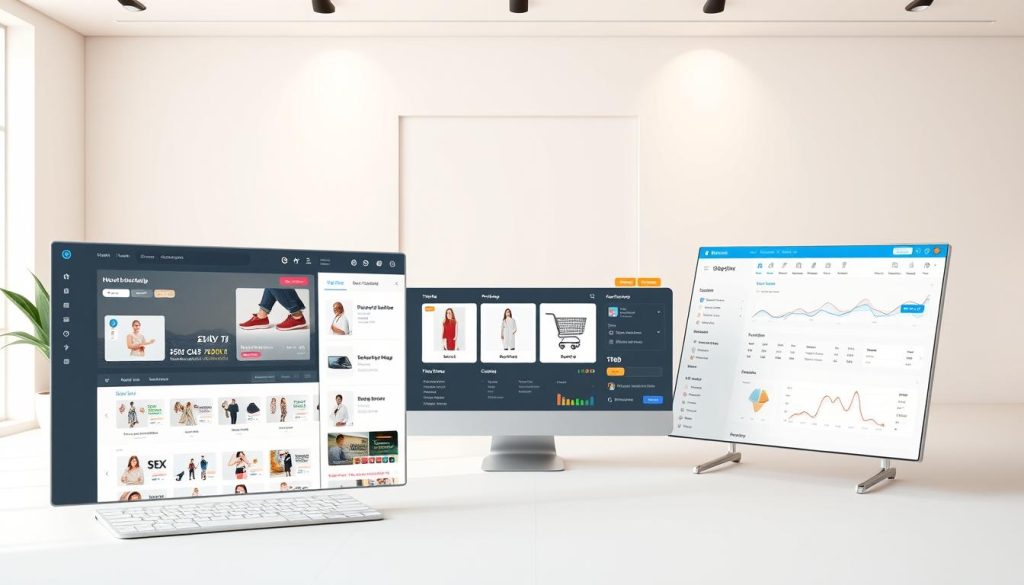
A good builder should let you customize your storefront and checkout. BigCommerce and Wix offer deep customization options. WooCommerce and WordPress have vast theme and plugin ecosystems for detailed tweaks.
For full control, Jumpseller and Strikingly allow you to edit layouts and checkouts. PrestaShop supports detailed personalization. These options help your brand shine without slowing you down.
Payment Gateway Integrations
Checkout should be secure, fast, and familiar. Wix Payments connects a global network. BigCommerce integrates with many gateways and supports 100+ currencies.
Squarespace offers simple checkout and real-time shipping estimates. Webnode supports PayPal, credit cards, and more. Shift4Shop integrates with PayPal and is Visa CPI Certified. Strong gateway coverage is key for high conversion.
SEO Tools for Better Visibility
Search visibility starts with clean code and fast pages. Wix provides meta editing and responsive templates. Weebly and Shift4Shop include built-in optimization.
Platforms like WiziShop emphasize technical readiness. Hostinger’s AI builder is known for robust SEO support. Look for schema options and image optimization. A good builder should boost your catalog and content in search results.
| Platform | Customization Strength | Payments & Currencies | SEO Highlights | Best For |
|---|---|---|---|---|
| BigCommerce | HTML/CSS/JS edits + visual builder; checkout control | 100+ currencies; wide gateway integrations | Clean structure; metadata control | Scaling brands needing flexibility |
| Wix | 500+ templates; deep drag-and-drop | Wix Payments; global coverage | Meta editing; responsive design | Teams prioritizing speed and design |
| WooCommerce | Theme and plugin ecosystem; granular control | Flexible gateways; auto tax; live shipping | Powerful WordPress SEO stack | Custom builds with content focus |
| Squarespace | Polished templates; streamlined edits | Simple checkout; real-time U.S. shipping | Built-in tools; clean markup | Design-led, brand-first stores |
| PrestaShop | Full theme, font, color, feature control | Multilingual and multi-currency selling | Advanced configuration options | Technical teams seeking depth |
| Jumpseller | End-to-end page and checkout edits | Local currencies; multi-language | SEO-ready structure | Cross-border, nimble launches |
When these features align, you get a powerful ecommerce platform. It’s customizable, SEO-friendly, and easy to use from the start.
Top Ecommerce Website Builders for 2026
Choosing the right ecommerce platform is key for your store’s success. It should be easy to use yet powerful. Also, it should help customers find your site easily.
Shopify: A Leader in the Market
Shopify is known for its speed, scalability, and wide range of apps. It offers built-in payment options, fast checkout, and strong inventory tools.
It’s great for growing businesses with its reliable hosting and global sales options. Shopify also has clean themes and tools for SEO, making it perfect for teams.
WooCommerce: Flexibility and Control
WooCommerce runs on WordPress and gives you full control over your site. It handles physical and digital products, and subscriptions easily.
It supports many currencies and languages. With WordPress SEO plugins, it’s a top choice for those who value open-source freedom.
BigCommerce: Built for Growth
BigCommerce focuses on performance and growth across various channels. Its visual editor and theme access allow for deep customization.
It offers tools for multiple currencies and languages, plus accurate shipping integrations. BigCommerce is a top choice for businesses looking to scale without extra hassle.
Wix: User-Friendly Interface for Beginners
Wix has an easy editor and over 500 templates. It also has an AI assistant to speed up setup. Sellers can manage large catalogs and orders on the Wix Owner app.
It supports global payments and has built-in analytics. Wix is ideal for new brands that want a simple, fast setup.
| Builder | Best For | Key Strengths | Sales Channels | SEO & Performance |
|---|---|---|---|---|
| Shopify | Scaling brands | App ecosystem, fast checkout, reliable hosting | Web, POS, social, marketplaces | Built-in SEO tools, speedy infrastructure |
| WooCommerce | Custom control | Open-source, extensive extensions, data ownership | Web, plugins for social and marketplaces | WordPress SEO stack, flexible performance tuning |
| BigCommerce | Omnichannel growth | Native B2C/B2B features, multi-currency, customization | Web, Amazon, Facebook, Instagram | SEO-friendly architecture, scalable hosting |
| Wix | Quick launches | AI setup, 500+ templates, mobile-ready | Web, social integrations, POS add-ons | Integrated SEO tools, solid site speed |
Comparing Pricing Models of Popular Ecommerce Builders
Pricing is key to your profit margins. It’s smart to compare plan tiers, add-ons, and fees before starting. Whether you seek an affordable online store builder or the best ecommerce website builder for growth, examine how each platform packages features and charges for payments, domains, and extras.
Tip: Free SSL is common across many plans. It reduces security costs and boosts trust at checkout.

Subscription Costs and Fees
Wix offers a free tier, but ecommerce and a custom domain require paid plans. You can use Wix Payments or third-party gateways, with standard processing rates applying.
BigCommerce has tiered pricing with growth-friendly perks like multi-currency and cross-channel selling. You choose a gateway, and processing fees depend on that provider.
WooCommerce is free as a WordPress plugin, but you’ll need to budget for hosting, themes, and extensions. Hosts like Bluehost include a free domain, SSL, CDN, and security updates on select WooCommerce plans.
Squarespace, Weebly, Webnode, SITE123, Jumpseller, and Shift4Shop offer layered tiers. Shift4Shop has a free plan in the U.S. when you use its payment solution. These options can be an affordable online store builder if the included features meet your needs.
Built-in SEO tools from Weebly, Squarespace, and others can lower add-on costs. This balance helps when choosing the best ecommerce website builder among a crowded field.
Hidden Charges to Watch Out For
- Domain registration and renewal when not bundled; Wix may charge, while Bluehost often includes a first-year domain.
- Transaction and gateway fees via Wix Payments, PayPal, Stripe, or gateways connected to BigCommerce and WooCommerce.
- Premium templates and extensions, such as WooCommerce add-ons or marketplace apps for BigCommerce and WordPress.
- Shipping and tax tools like ShipperHQ or automated tax services that charge beyond basic tiers.
- Email marketing upgrades if built-in sending is limited; some platforms integrate Mailchimp, while GetResponse Website Builder bundles email marketing.
Look at value, not just price. If your top ecommerce platform includes SSL, analytics, and SEO, you may spend less on third-party tools. This keeps your affordable online store builder budget-friendly while acting like the best ecommerce website builder for scale.
Ease of Use: Which Platforms are Beginner-Friendly?
Starting an online shop should be easy and straightforward. Look for platforms with guided setup, drag-and-drop editing, and strong onboarding. These features help you launch quickly and avoid design and checkout mistakes.
Fast-start tools matter. Durable can set up a draft in minutes. 10Web uses AI to streamline WordPress. Hostinger’s AI builder offers quick setup and solid SEO support, helping new stores grow.
Intuitive Interfaces
Wix has an AI assistant and drag-and-drop editing with a vast template library. The Wix Owner app lets you manage your store from your phone. Weebly’s drag-and-drop flow is great for beginners and comes with basic SEO setup.
SITE123 offers simple, responsive layouts that look good on mobile. BigCommerce uses a Visual Editor to make page design easy. Strikingly and Webnode focus on quick, in-browser edits. These platforms are easy to use without extra features.
While Wix is versatile, it may take some time to learn. More technical systems like Adobe Commerce require patience and developer support. They are not ideal for beginners.
Customer Support and Resources
24/7 support helps new sellers. SITE123 and Bluehost offer round-the-clock help. Strikingly and Squarespace also provide 24/7 assistance. Webnode adds priority phone support for Premium users.
For complex builds, Adobe Commerce has a global community and certified developers. Professional agencies like Studio Webmaster handle advanced integrations and custom themes. This support helps beginners grow while allowing for scalability.
Scalability: Growing Your Business with the Right Platform
Growth is unique for every store. Ecommerce is expected to hit $8.1 trillion by 2026. You’ll need to handle more traffic, products, and markets. A good platform should grow with you, without downtime.
Think ahead: Check product limits, checkout options, and analytics. A customizable website builder is key for expanding into new markets and channels.
How to Identify Your Growth Needs
- Catalog scale: check product limits and variants. For example, Wix supports up to 50,000 products, while Shoplazza allows up to 300 variants per product.
- Markets: require multi-currency, localized tax rules, and multilingual storefronts for international buyers.
- Channels: plan for marketplaces and social sales across Amazon, Facebook, and Instagram.
- Checkout: test customization for upsells, subscriptions, and local payment methods.
- Performance: confirm CDN use, PCI-ready checkout, and order processing at peak volume.
- Data: ensure event-level analytics and clear attribution to guide ad spend.
Use this checklist before you commit. It helps find a top ecommerce platform that meets your targets for inventory, speed, and marketing.
Platforms That Scale with You
Several builders handle bigger catalogs and complex ops. Each one can serve as a professional online store builder or a customizable website builder depending on your stack.
- BigCommerce: Multi-currency, multi-language, and cross-channel commerce with Amazon, Facebook, and Instagram; deep developer tooling with HTML, CSS, JS, and Stencil CLI; integrates with ShipperHQ for advanced shipping.
- WooCommerce: Open-source and extension-rich; supports high order volumes, automated taxes, and multiple currencies; scales on hosts like Bluehost WooCommerce plans with backups and analytics.
- WordPress Ecommerce: Blends content and commerce; supports subscriptions, memberships, and digital goods through plugins; flexible for content-led growth.
- PrestaShop: Built for international catalogs; robust marketing tools and centralized management for complex catalogs and regions.
- Squarespace: Centralized inventory across online and in-person sales; automated tax options and clean checkout experiences for omnichannel teams.
- Shift4Shop: Unlimited products on the free plan; centralized inventory, built-in SEO, and cart recovery for steady scaling.
Do not overlook infrastructure. Shoplazza, Shift4Shop, and Weebly support bulk import and export for large catalogs; Shoplazza offers 150+ shipping partners, while BigCommerce connects with ShipperHQ and Webnode supports DHL and FedEx.
AI can speed launch and iteration. Prompt-to-site tools cut build time, Turbologo helps lock in branding, and Hostinger AI lays an SEO foundation that supports scale on a top ecommerce platform.
| Platform | Scale Strength | Catalog & Variants | Global & Channels | Ops & Dev Tools |
|---|---|---|---|---|
| BigCommerce | Enterprise-grade growth | Large catalogs, flexible options | Multi-currency, multi-language, Amazon/Facebook/Instagram | Stencil CLI, HTML/CSS/JS, ShipperHQ |
| WooCommerce | Open-source flexibility | High order volumes, extensive extensions | Multiple currencies, wide integrations | Scalable hosting, automated taxes, backups |
| PrestaShop | International catalogs | Deep product taxonomy | Localized selling and marketing | Centralized management, integrations |
| Squarespace | Omnichannel inventory | Unified stock for online/pos | Automated tax, global readiness | Clean checkout, simple extensions |
| Shift4Shop | Unlimited products | Bulk management | Cross-channel inventory | Built-in SEO, recovery tools |
Match your roadmap to the right stack. A customizable website builder paired with reliable shipping, taxes, and analytics forms a durable base for the next stage of growth on a professional online store builder.
The Importance of Security in E-commerce
Shoppers trust stores that protect their data and payments. A good website creator should offer strong encryption, safe checkouts, and clear privacy controls. The best ecommerce website builder also ensures fast and reliable service, making every visit safe and smooth.
Brands that invest in visible security signals win more carts and repeat visits. Look for platforms that offer SSL, real-time fraud checks, and easy policy tools. These features reduce risk and help pages rank and convert better.
SSL Certificates and Payment Protection
Free SSL is now standard on SITE123, Webnode, Bluehost, Strikingly, and Squarespace. It encrypts data in transit and boosts trust. Shift4Shop adds Visa CPI Certified Security, while PayPal and Stripe integrations bring PCI-compliant processing across many builders.
Wix Payments provides secure, global transactions, and WooCommerce offers flexible, secure payment options through vetted gateways. Cart abandonment recovery and fraud protection in Shift4Shop harden checkout and help save high-intent orders on any professional online store builder.
- Automatic patches and malware scans on Bluehost reduce exploit risk.
- Enterprise-grade uptime on Weebly, Squarespace, and BigCommerce supports stable sales.
- Verified carriers and real-time shipping rates on BigCommerce and Webnode limit delivery disputes.
Data Privacy Considerations
Choose a best ecommerce website builder that lets you control what you collect and keep. Editable SEO metadata and URL slugs aid transparency, while clear content ownership and export options prevent lock-in.
Review image licenses, tailor product copy, and log consent for emails. An SEO-friendly website creator should offer role-based access, backups, and data retention tools so teams work safely and audits stay simple.
| Security Feature | Why It Matters | Platforms Noted | Operational Benefit |
|---|---|---|---|
| SSL Encryption | Protects logins and checkout data | SITE123, Webnode, Bluehost, Strikingly, Squarespace | Higher trust signals and better SEO |
| PCI-Compliant Payments | Meets industry card security standards | Shift4Shop (Visa CPI), PayPal, Stripe, Wix Payments, WooCommerce | Reduced chargeback risk and safer processing |
| Fraud and Abandonment Tools | Blocks bad orders and recovers carts | Shift4Shop | Improved revenue integrity |
| Automated Security Updates | Closes known vulnerabilities | Bluehost | Lower maintenance and fewer incidents |
| Enterprise Uptime | Keeps stores available during peaks | Weebly, Squarespace, BigCommerce | Stable conversions and ad ROI |
| Shipping Verification | Reduces fulfillment disputes | BigCommerce, Webnode | Fewer support tickets, clearer ETAs |
| Data Control & Export | Prevents lock-in and supports audits | Available across major builders | Cleaner handoffs and compliance readiness |
When comparing an SEO-friendly website creator to a professional online store builder, confirm these safeguards are native or one-click. The best ecommerce website builder will make security the default, not an add-on.
Integrating Marketing Tools with Ecommerce Builders
A user-friendly ecommerce website is easier to promote when your builder connects smoothly with email and social tools. The right stack turns steady traffic into repeat buyers. Choose a top ecommerce platform or an SEO-friendly website creator that blends automation, analytics, and cross-channel reach.
Email Marketing Integration
GetResponse Website Builder pairs AI site creation with robust email flows, so new products trigger timely campaigns. Shoplazza links natively with Mailchimp, making signup forms and segmented sends simple to launch.
Squarespace supports branded email campaigns tied to on-site activity, while Shift4Shop adds built-in promotions like group deals, daily deals, and coupons. WiziShop includes email marketing and analytics, plus abandoned cart nudges that lift recovery rates.
For a user-friendly ecommerce website, look for templates that drop in forms, sync contacts, and map events. An SEO-friendly website creator with clear analytics helps refine subject lines, send times, and offers.
Social Media Connectivity Options
BigCommerce connects products to Amazon, Facebook, and Instagram for true cross-channel selling. Sellfy streamlines social sales on Facebook and Instagram, letting creators launch fast without heavy setup.
Squarespace centralizes inventory for online and in-person sales, and Jumpseller and Webnode support multi-language and multi-currency to widen reach. Product feeds in Webnode power price comparisons, while membership log-ins and coupons in Strikingly drive repeat visits.
When choosing a top ecommerce platform, confirm that tags, UTM parameters, and pixel events carry across channels. With Weebly, Wix, and Hostinger’s AI builder, your catalog stays indexable while social campaigns feed qualified traffic back to an SEO-friendly website creator.
Conclusion: Choosing the Best Ecommerce Website Builder for Your Needs
The ecommerce market is growing fast, expected to hit $8.1 trillion by 2026. Choosing the right platform is key. Look for one that offers quick setup, customization, secure payments, and scalability. Shopify, Wix, BigCommerce, and WooCommerce are top choices.
BigCommerce and WooCommerce offer advanced features. Wix is great for beginners, while Shopify is ideal for focused sellers. The right platform should meet your needs.
Recap of Key Takeaways
Speed is important when starting your online store. Use AI tools from Wix, Hostinger AI, or Durable to set up fast. BigCommerce and WooCommerce let you customize deeply.
Keep your store secure with free SSL and Visa PCI Certified Security. Plan for growth with multi-currency and multilingual options. Use email integrations and SEO tools to attract customers.
Next Steps for Starting Your Online Store
First, decide what you need: product types, currencies, languages, and channels. Wix, BigCommerce, and Shoplazza offer great features for this. Make sure the platform is easy to use with visual editors.
Check if the platform has good support. Look at costs for hosting, domains, SSL, and payment fees. Use AI to create your site quickly, then refine it.
Integrate marketing tools and add social selling features. Use on-site promos and track your analytics. Choose a platform that fits your budget and growth plans. Build a minimum viable product (MVP) and scale as needed.
FAQ
What is the best ecommerce website builder for 2026?
Shopify, BigCommerce, WooCommerce (on WordPress), and Wix are top choices for U.S. entrepreneurs. Shopify has a vast app ecosystem and strong payments. BigCommerce is built for scale and cross-channel selling.WooCommerce offers granular control and open-source flexibility. Wix is user-friendly with an AI assistant and 500+ free templates. AI tools like Hostinger’s AI Website Builder, Durable, and 10Web help launch fast.
How do AI website builders change the process of launching an online store?
AI builders generate SEO-friendly websites in minutes from short prompts. Tools like Turbologo create a synchronized brand—logo, fonts, and color palette—alongside your site. Hostinger’s AI builder pairs simplicity with strong SEO.Durable is ideal for rapid one-pagers. 10Web layers AI on WordPress to cut build time. This shift moves creation from developer-centric to strategic and fast for founders and small teams.
Which platforms are the most affordable online store builders?
Wix and SITE123 offer entry-level plans with free SSL and basic ecommerce on paid tiers. WooCommerce is free to add to WordPress, though you’ll pay for hosting (e.g., Bluehost), premium themes, and extensions. Shift4Shop has a free plan in the U.S. when you use its payment solution.Look beyond sticker price to payment processing, extensions, domains, and shipping tools.
What features should I prioritize in a customizable website builder?
Look for theme control (HTML/CSS/JS on BigCommerce), robust template libraries (Wix’s 500+), plugin and extension ecosystems (WooCommerce, WordPress), and checkout customization. Ensure you can edit metadata, URLs, and schema for an SEO-friendly website creator experience.Multi-currency, multilingual, and flexible product types (physical, digital, subscriptions) matter as you grow.
Which payment gateways do leading platforms support?
Wix Payments connects to a global network. BigCommerce supports 100+ currencies and many gateways. WooCommerce integrates with PayPal, Stripe, and automated tax/shipping tools.Webnode supports PayPal, Stripe, cards, wire transfers, and payment upon pickup. Squarespace offers simple checkout with real-time U.S. shipping estimates. Choose gateways that match your customers’ preferences and geographies.
How do these builders handle SEO for online stores?
Most include SEO basics: editable titles, meta descriptions, alt text, and clean URLs. Wix, Squarespace, and WordPress offer built-in SEO tools. Hostinger’s AI builder is noted for strong SEO support.Shift4Shop pre-optimizes site sections, and WiziShop emphasizes technical SEO. Pair platform tools with quality content, fast hosting, and structured data.
Which platform is easiest for beginners?
Wix and SITE123 are easy-to-use ecommerce platforms with visual editors and responsive templates. Weebly is beginner-friendly with drag-and-drop and built-in SEO. BigCommerce’s Page Builder is intuitive, and the Wix Owner app helps manage on the go.WooCommerce has a learning curve but is manageable with hosts like Bluehost and 10Web’s AI assist.
How do I compare pricing models and hidden costs?
Compare subscription tiers, transaction and gateway fees, domain renewal, premium themes, paid apps, shipping tools (e.g., ShipperHQ on BigCommerce), and email marketing add-ons. WooCommerce requires hosting and often paid extensions.Wix and BigCommerce bundle more features in higher tiers. Factor in your product volume and channels to avoid overpaying.
What makes an ecommerce builder scalable?
Scalability includes multi-currency, multilingual support, cross-channel selling (Amazon, Facebook, Instagram), robust inventory, and high SKU limits. BigCommerce excels at enterprise features and developer access.WooCommerce scales with optimized hosting and extensions. Wix supports up to 50,000 products. Choose a platform that won’t cap growth as traffic and catalogs expand.
How do these platforms support user experience and conversion?
Templates, responsive design, and fast checkout drive conversions. Wix’s 500+ templates guide shopper expectations. BigCommerce offers mobile optimization and checkout customization.Platforms with real-time shipping rates and local payment options reduce friction. Framer shines for design-focused pages, while SITE123 keeps workflows simple.
What security features should I expect?
Free SSL is standard on SITE123, Webnode, Squarespace, and many hosts like Bluehost. Shift4Shop features Visa CPI Certified Security. Major gateways like PayPal and Stripe are PCI compliant.Look for automated security updates, backups, and malware detection on hosting stacks. Use strong passwords, 2FA, and review access roles.
How is customer data privacy handled?
Most platforms provide controls for metadata, URLs, and content ownership, plus export options. Review each provider’s privacy policy, data retention, and export tools. If you serve international buyers, ensure compliance with local regulations and disclose cookies, analytics, and email consent clearly.
Which platforms integrate well with email marketing?
GetResponse Website Builder blends AI site creation with email campaigns. Squarespace offers built-in email. WooCommerce connects to Mailchimp and many ESPs. Shoplazza integrates natively with Mailchimp. Shift4Shop includes email marketing and recovery tools.Choose an integration that supports automation and segmentation.
How do I sell across social media and marketplaces?
BigCommerce integrates with Amazon, Facebook, and Instagram for cross-channel commerce. Sellfy supports social selling on Facebook and Instagram. Squarespace centralizes inventory for online and in-person sales.Sync product feeds and inventory to prevent overselling and to streamline fulfillment.
Can I start with an MVP and scale later on the same platform?
Yes. Durable and Hostinger’s AI builder help you launch fast. 10Web accelerates WordPress builds that can grow with WooCommerce. BigCommerce supports advanced customization as you scale, while Wix lets you start with templates and expand catalog and apps over time.Plan for product limits, variants, and multi-currency early.
What are the first steps to choosing the best ecommerce website builder?
Define must-haves: product volume, variants, currencies, languages, channels, and SEO. Shortlist two or three platforms—often Shopify, BigCommerce, WooCommerce, or Wix—based on budget and timeline. Build a quick MVP, connect payments and shipping, enable analytics, and iterate.This approach balances speed to market with long-term flexibility.