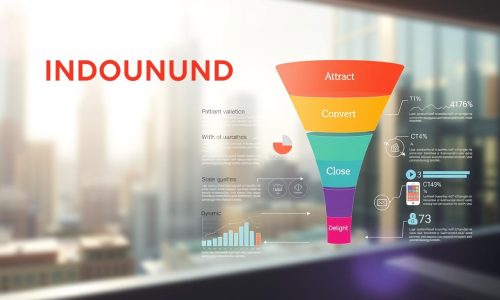
Gartner says buyers only spend 17% of their time with vendors. The rest happens in online communities, Slack, LinkedIn, and direct messages. In the US B2B software market, this gap is where SaaS demand generation succeeds or fails.
Demand generation for SaaS is like warming up the market before you ask for a demo. It builds awareness, interest, and intent before you even ask for a meeting. Unlike just capturing leads, SaaS demand generation uses content, SEO, social proof, and email to create a powerful system.
What makes a difference today is how everything works together. A good demand generation strategy uses helpful content, search visibility, and credible case studies. It also sends targeted emails that educate, not annoy. This approach feeds sales with qualified leads and cuts down on waste.
When marketing, sales, and customer success work together, SaaS demand generation really pays off. They share goals, KPIs, and dashboards. This leads to better handoffs, higher win rates, and improved customer retention in a digital world.
This article will teach you how to spark interest, measure success, and grow momentum in the US B2B software market. You’ll learn how to grab attention, build trust, and convert demand at every step.
What Makes Demand Generation for SaaS Different from Lead Generation
In SaaS, not all leads are created equal. Demand generation focuses on building trust and intent before any form is filled. Lead generation, on the other hand, captures contacts. The first step warms the ground, while the second harvests.
A strong demand generation strategy for SaaS ensures prospects are informed and ready to engage. This approach shapes a pipeline based on education, not pressure.
The result is a pipeline shaped by education, not pressure. Teams using B2B SaaS demand generation teach buyers about value and timing. When capture happens, the conversation is already halfway there. This is where SaaS demand generation strategy services shine.
Core definitions and why awareness precedes capture
Lead generation collects contact details from forms, ads, or events. Demand generation for SaaS builds awareness and intent long before capture. It uses stories, proof, and helpful resources to spark need.
When awareness comes first, leads convert faster and churn less. Buyers understand pricing, onboarding, and outcomes. This clarity turns interest into action, making demand generation more efficient than cold capture alone.
Key components: content marketing, SEO/SEM, social proof, and email
Content marketing fuels education through blog guides, product walkthroughs, webinars, and whitepapers. SEO and SEM ensure discoverability at high-intent moments. Searchers find answers, not fluff.
Social proof bridges interest to belief. Use case studies, G2 quotes, and real customer testimonials on product pages. Email nurtures with useful tips, onboarding previews, and role-based use cases—classic B2B SaaS demand generation in motion.
Marketing automation and digital channels as the backbone
Automation connects the journey across channels. Platforms like HubSpot, Marketo, and Salesforce Marketing Cloud score engagement, trigger sequences, and surface sales-ready moments. This backbone keeps messages timely and personal at scale.
Paid social, search, and partner media meet prospects where they learn. Owned channels—sites, blogs, and email—carry the story forward. SaaS demand generation strategy services stitch these paths together so that every step compounds intent.
| Focus | Demand Generation for SaaS | Lead Generation | Impact on Pipeline |
|---|---|---|---|
| Primary Goal | Build awareness, intent, and problem–solution fit | Capture contact information for follow-up | More qualified, informed opportunities |
| Core Tactics | Content, SEO/SEM, social proof, and email nurturing | Forms, gated assets, list buys, event scans | Higher conversion rates post-capture |
| Tools | Marketing automation, CRM, analytics, intent data | Landing pages, forms, basic CRM | Consistent scoring and timely handoffs |
| Time Horizon | Long-term education across channels | Short-term capture for outreach | Sustainable, compounding pipeline |
| Best Fit | b2b saas demand generation with complex buying groups | Simple offerings and quick trials | Better sales efficiency and win rates |
| Role of Services | saas demand generation strategy services to align channels and data | Campaign setup and basic list growth | Stronger intent signals before sales |
Why Demand Generation B2B SaaS Pipelines Thrive on Alignment
In fast-moving markets, b2b saas demand generation works best when teams move as one. Clear handoffs, shared context, and tight feedback loops turn awareness into revenue. An experienced demand generation agency for b2b saas can help set the rhythm and keep signals consistent across the funnel.
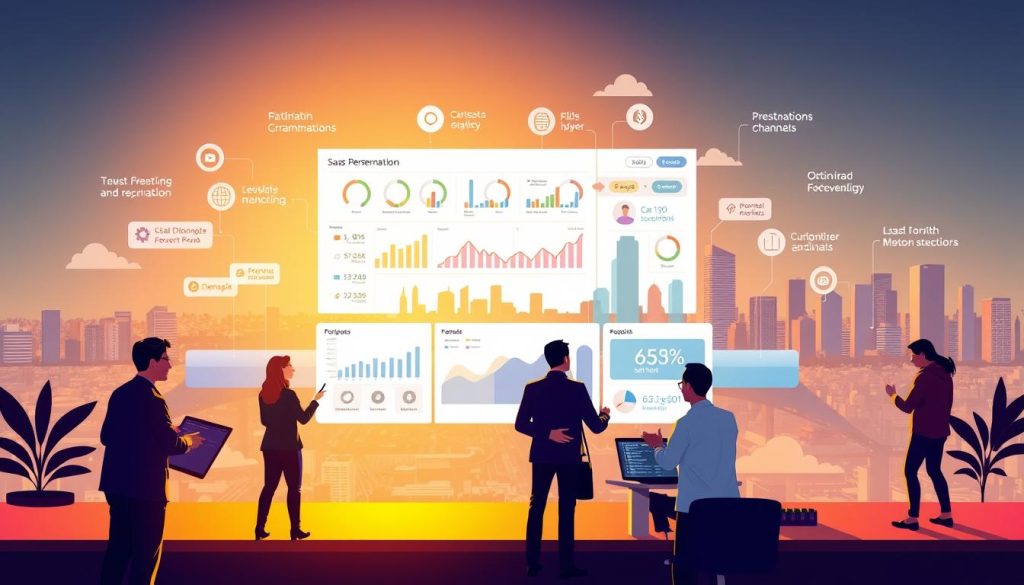
Sales, marketing, and customer success as a “relay race”
Think of product, marketing, sales, and success passing the baton with intent. Marketing primes the lane for demand generation b2b saas through content, ads, and events. Sales matches pain to outcomes and secures the commit. Customer success anchors the finish, driving renewals and expansion that fuel b2b saas demand generation loops.
Timing and context matter. Sales needs campaign calendars and offer details. Success shares product usage insights so messages land with proof. A demand generation agency for b2b saas can codify these handoffs to reduce friction.
Shared KPIs, clear ICPs, and unified dashboards
Teams align on the same ideal customer profile and stage definitions. That means one ICP, one set of qualification rules, and one view of pipeline health. With a unified dashboard, marketing, sales, and success track identical numbers and meet on a fixed cadence.
- ICPs refined with customer success data on adoption and time-to-value
- Shared KPIs spanning lead quality, cycle time, win rate, and net revenue retention
- Dashboards that connect b2b saas demand generation inputs to outcomes
When metrics match, incentives do too. That keeps demand generation b2b saas motion focused on revenue, not vanity counts.
Evidence: higher win rates and retention with tight alignment
Aligned teams see stronger conversion across stages. Research commonly links coordination with higher sales win rates and improved customer retention. This effect compounds in subscription models, where renewals and expansions become the flywheel for demand generation b2b saas.
| Alignment Practice | Pipeline Impact | Why It Works | Who Owns It |
|---|---|---|---|
| Unified ICP and qualification | Cleaner stages, shorter cycles | Targets fit needs and budget from the start | Marketing + Sales + Success |
| Shared KPIs and definitions | Higher win rates | One scoreboard reduces misfires and rework | Revenue leadership |
| Closed-loop feedback | Better lead quality | Sales and success insights tune campaigns | Marketing ops |
| Unified dashboards | Faster course correction | Real-time view links signals to outcomes | RevOps |
| Lifecycle playbooks | Stronger retention and expansion | Consistent handoffs across teams | Customer success |
| External orchestration support | Repeatable b2b saas demand generation | Process and governance from a demand generation agency for b2b saas | Executive sponsor |
Strategic Frameworks to Power Demand Generation Strategy for SaaS
A clear framework turns scattered tactics into a repeatable playbook. A strong demand generation strategy for SaaS blends messaging, timing, and channels. This makes buyers move forward with less friction and more intent.
Applying AIDA to the SaaS buyer journey
AIDA maps neatly to modern SaaS motions. For Awareness, lead with search-ready content, comparison pages, and SEO. This highlights real use cases.
Interest grows with webinars, bite-size product tours, and how-to guides. These answer “how will this work for me?”
Desire builds when free trials, sandbox demos, and ROI stories prove value. Action follows with clear pricing pages, Calendly-style demo booking, and strong CTAs. This keeps saas demand generation focused on momentum, not noise.
Buyer personas for precision targeting in demand generation for SaaS
Personas sharpen the message and the route to it. Map pain points for roles like CFO, RevOps, and Product Marketing. Then tailor proof and language to each.
In a demand generation strategy for b2b saas, persona detail guides channel picks, offer types, and conversion paths. Use signals from platforms like LinkedIn to refine seniority and industry filters. Align nurture tracks to persona-specific objections, from integration risk to time-to-value.
Multi-channel orchestration across paid, owned, and earned media
Effective saas demand generation requires coordinated touches across paid, owned, and earned media. Run PPC and retargeting to capture high intent. Use owned assets—site, blog, email, and live or virtual events—to educate and convert.
Earned reach from reviews, community posts, and customer stories amplifies trust. Sequence matters. Start with discovery on search and LinkedIn, follow with mid-funnel education via webinars and email, and close with product-led proof and sales-assisted demos. When channels echo the same promise, the demand generation strategy for SaaS scales with consistency and clarity.
TOFU, MOFU, BOFU: Building a Demand Generation Strategy for B2B SaaS Funnel
A strong funnel guides interest with clear steps and simple metrics. It’s like a path that turns curiosity into action. Each stage helps meet your demand generation goals and prepares for the next step.
At the top, middle, and bottom, the goal shifts—awareness, evaluation, and commitment. The right mix of channels, content, and timing creates momentum for a demand generation strategy for b2b saas that scales.
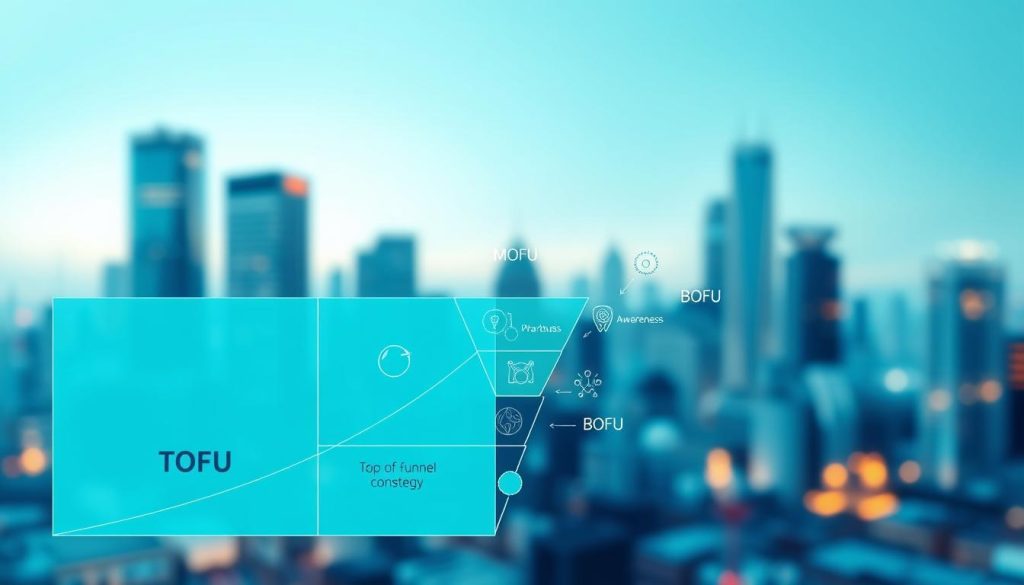
TOFU: SEO, PPC, social, and content to create awareness and MQLs
Start broad to spark demand. Use SEO to win high-intent queries, and pair it with PPC for fast reach on Google Ads and Microsoft Advertising. Social posts on LinkedIn and X highlight pain points and outcomes.
Publish snackable guides, checklists, and short videos. Gate a few assets to collect clean MQLs. This fuels demand generation b2b saas while setting baseline engagement signals.
MOFU: email nurturing, personalization, and education to create SQLs
Segment by role, industry, and behavior. Send drip emails that teach, not pitch. Offer product walkthroughs, ROI calculators, and webinars that map to use cases.
Personalize by intent data and page views. Align messaging to evaluation criteria. This turns warm MQLs into clear SQLs and strengthens demand generation saas momentum.
BOFU: retargeting, lead scoring, and sales enablement to close
Run retargeting to re-engage visitors who compared pricing or viewed demos. Prioritize leads with behavior-based scoring in HubSpot or Salesforce. Share case studies from brands like Slack, Atlassian, or Snowflake that mirror the buyer’s context.
Equip sales with battlecards, objection handlers, and one-page ROI proofs. Tight collaboration keeps the demand generation strategy for b2b saas moving, reducing cycle time and boosting close rates.
Content, SEO, and Social Proof That Accelerate Demand Generation SaaS Growth
High-impact content is key in saas demand generation. It educates, builds trust, and attracts the right buyers. Combine it with sharp SEO and credible proof for faster growth.
Valuable content that solves real customer pain points
Start by identifying problems your ideal customers face. Publish guides, webinars, and whitepapers that offer clear solutions. Use simple language and visuals to keep readers engaged.
Brands like HubSpot and Atlassian focus on teaching first. This approach creates informed buyers who ask better questions and convert easier.
SEO for discoverability: keyword research, UX, and freshness
Match keywords to intent and structure pages for easy scanning. Use clear headings, fast load times, and strong internal linking. Keep content fresh by updating it regularly.
Google values relevance and recency. Refresh cornerstone posts and add schema markup. This boosts organic reach and enhances saas demand generation efforts over time.
Case studies and whitepapers as credibility multipliers
Place case studies and testimonials near product pages and pricing. Highlight ROI, time saved, or risk reduced. This supports demand generation for saas decisions.
Whitepapers and benchmark reports increase authority on LinkedIn and during sales calls. These assets prove value with evidence buyers trust.
- Channel fit: Share content where buyers already engage, such as LinkedIn for B2B and YouTube for tutorials.
- On-site journeys: Use related articles and CTAs to guide readers to demos, trials, or ROI calculators.
- Consistency: Keep a weekly publishing rhythm to sustain momentum and reinforce saas demand generation.
PPC and Email: High-Intent Channels for Demand Generation Strategy for B2B SaaS
Paid search and lifecycle email are key to turning interest into action. PPC attracts people looking for solutions, while targeted emails keep the conversation relevant. Together, they boost any demand generation strategy for B2B SaaS and improve conversion rates.
Crafting compelling PPC copy that addresses pain and outcomes
Start with the problem, then offer a clear solution. Use strong verbs, numbers, and deadlines to create urgency. For example, “Cut onboarding time by 40%,” “Launch audits in minutes,” “Start a risk-free trial today.”
Match ads to what people are searching for. Use keywords like “pricing,” “demo,” or “compare.”
Ensure ads and landing pages match closely. Repeat the main message and add proof from trusted brands. Fast, simple forms help turn clicks into demos without hassle.
Email list segmentation for relevance and engagement
Segment your list based on behavior, role, and company size. For instance, target CTOs differently than operations leaders. Tailor your messages to their specific needs.
Use personal language and focus on outcomes. This approach lowers unsubscribes and increases replies. It keeps your demand generation strategy moving forward.
Nurture workflows that build trust and readiness
Create short, focused sequences. A welcome series sets the tone and guides the next steps. Educational drips share valuable content like playbooks and videos.
Match PPC insights with your email campaigns. If someone clicked on a compliance ad, send them a checklist and demo invite. This approach meets their needs with timely, relevant information.
Advanced Plays: ABM, Retargeting, AI, and the Dark Funnel
As demand generation saas programs grow, advanced tactics help teams reach buyers sooner. They signal intent quicker and focus spending where it counts. These strategies combine precise outreach with real-time data and conversation insights.
Account-based marketing for high-value accounts
ABM turns the broad funnel into a precise approach. It starts with accounts based on revenue and fit. Personalized paths are built for each role and use case.
LinkedIn, Salesforce, and HubSpot show the power of targeted sequences and ads. They boost engagement with decision makers.
Marketers see strong success and revenue gains with ABM. This guide on modern account-based marketing supports this. It suggests balancing budget between direct demand and brand.
Retargeting to re-engage evaluators across channels
Most visitors leave before acting. Retargeting brings them back with relevant content. Show product snippets to trial users, comparison assets to researchers, and ROI stories to executives.
Use site events, ad platform audiences, and email signals for outreach. This keeps outreach light and relevant, supporting demand generation saas efforts.
AI-driven predictive analytics and hybrid attribution
Machine learning predicts conversion and churn risk from data. Score accounts by buying likelihood. Route plays based on intent: demos for high scores, education for mid scores, and nurture for low scores.
Combine model insights with hybrid attribution. Blend click-path data with self-reported cues. This aligns creative, budget, and sales outreach with clearer signals.
Navigating the dark funnel and self-reported attribution
The journey often happens in private: Slack groups, podcasts, events, and word of mouth. Add a “How did you hear about us?” field and log origin stories. Review themes weekly to uncover unseen drivers.
When you capture these insights, refine content and strategies. Over time, demand generation saas programs see compounding lift as unseen influence becomes visible.
Measuring Success and When to Use a SaaS Demand Generation Agency
Knowing what works is key. Great teams focus on what boosts revenue and cut what doesn’t. Whether you manage it yourself or work with a saas demand generation agency, keep it simple and outcome-based.
KPIs to track: conversion rates, CLV, churn, and pipeline impact
Watch how customers move through your sales process and how much they spend over time. Look at conversion rates at each stage. Also, check customer lifetime value and churn to see if you’re attracting the right customers.
Also, track how your pipeline grows, moves, and wins deals. Share these KPIs on dashboards so everyone sees the same picture. Regular check-ins help make better decisions and use resources wisely.
Attribution modeling: first-click, last-click, and multi-touch
Attribution helps figure out which actions lead to sales. First-click shows who started the process. Last-click shows who closed it. Multi-touch spreads credit across different marketing efforts.
Use these models to compare different marketing channels like Google Ads, LinkedIn, and webinars. Look at how much you spend, what you create, and who you target. A demand generation agency for b2b saas can help refine these models for complex sales.
Hybrid attribution to capture dark funnel insights
Many buyers learn in places analytics can’t see. Communities, Slack groups, and word of mouth often spark interest. Add self-reported data and insights from calls to capture this hidden influence.
Combine data from platforms with qualitative feedback for a hybrid view. This balance helps value your brand, content, and peer recommendations while improving performance.
When to engage a demand generation agency for B2B SaaS
Consider a partner when hiring is slow, growth goals are tight, or marketing channels aren’t working. A saas demand generation agency offers proven strategies, quick testing, and the skills to execute your strategy.
Look for alignment with your KPIs, CRM, and analytics. The right demand generation agency will match your revenue goals, adapt to your target market, and speed up your efforts without adding complexity.
| Decision Area | In-House Focus | Agency Advantage | How It Improves Outcomes |
|---|---|---|---|
| Speed to Market | Longer ramp with hiring and onboarding | Immediate access to specialists and tools | Faster tests and quicker path to pipeline |
| Channel Expertise | Depth varies by team size | Cross-channel mastery (SEO, PPC, paid social, CRO) | Better allocation and stronger CAC efficiency |
| Attribution and Reporting | Limited models and ad-hoc dashboards | Multi-touch and hybrid frameworks operationalized | Clear visibility into what truly drives revenue |
| Creative and Messaging | Fewer iterations and slower refresh | Ongoing testing across segments and stages | Higher engagement and improved conversion rates |
| Scalability | Team bandwidth caps pilot volume | Elastic resourcing for demand generation for saas | More experiments without sacrificing quality |
Conclusion
Today’s buyers do their own research and make quick decisions. That’s why saas demand generation must be ongoing, not just a one-time effort. It starts by building awareness, then educates to spark interest, and ends by converting with data-driven actions.
Content, SEO, social proof, email, and PPC work together. Automation ensures messages are consistent at scale. This teamwork turns the system into a source of revenue.
When product, marketing, sales, and customer success work together, pipelines grow. MarketingProfs studies show win rates can increase by about 38%. Tight alignment also leads to 36% higher retention, according to HubSpot.
Clear handoffs are key to success. Without them, almost three-quarters of leads stall, as HubSpot reports. A reliable structure guides the work, keeping focus on attention and action.
Buyer personas help target the right audience. The TOFU/MOFU/BOFU model guides stage-specific tactics. For advanced scale, ABM, retargeting, AI, and hybrid attribution are essential. They help see the “dark funnel,” where buyers spend little time with suppliers.
Measure what matters and optimize. Track conversion, CLV, churn, and pipeline impact. Refine creative, offers, and routing as needed. When speed is an issue, a specialized partner can help.
Demand generation for saas can be a strong engine for U.S. B2B growth. It’s a practical strategy that meets today’s buying habits. It ensures a steady flow of leads and customers.
FAQ
What is SaaS demand generation, and how is it different from lead generation?
SaaS demand generation focuses on building awareness and intent before getting contact info. This way, leads are ready to buy. Lead generation, on the other hand, just collects details. Think of demand gen as preparing the soil with content, SEO, social proof, and email. Then, when you harvest with forms and demos, you get better quality and conversion.
Why should awareness precede capture in demand generation for SaaS?
Buyers do their own research and compare vendors. They also trust what their peers say. By educating them early with helpful content and social proof, you increase their intent. When they convert, they’re ready for demos, which shortens sales cycles and boosts win rates.
Which components are essential to a demand generation strategy for SaaS?
Key components include content marketing (like blogs, webinars, and whitepapers), SEO/SEM for discoverability, and social proof (such as case studies and reviews). Also, segmented email nurturing is important. Together, they create a consistent pipeline and improve the quality of leads and prospects.
How do marketing automation and digital channels support B2B SaaS demand generation?
Tools like HubSpot, Marketo, or Pardot automate sequencing, scoring, and personalization across email, site, and ads. They help orchestrate touches, track behavior, and ensure buyers get the right message at the right time, all at scale.
Why do demand generation B2B SaaS pipelines rely on alignment across teams?
Alignment removes silos and handoff friction. When product, marketing, sales, and customer success work together, campaigns convert better. Feedback loops tighten, and pipeline velocity improves.
How do shared ICPs, KPIs, and dashboards improve outcomes?
A common ideal customer profile targets the right accounts. Shared KPIs and unified dashboards reveal what’s working across different stages. This way, teams can iterate together and invest where revenue impact is highest.
What evidence shows alignment increases win rates and retention?
Studies show 38% higher win rates with strong alignment and significantly higher retention when sales and marketing operate as one. Lack of alignment correlates with most marketing leads never converting.
How does AIDA apply to a SaaS demand generation strategy?
Map AIDA to motions: Awareness via SEO and thought leadership; Interest with webinars and product education; Desire through use-case content and trials; Action via demos and high-intent offers. It structures messaging and progression.
Why are buyer personas critical in demand generation for SaaS?
Personas clarify pains, triggers, and jobs-to-be-done. They guide content, keywords, and outreach, improving relevance and conversion across paid, owned, and earned channels.
What does multi-channel orchestration look like in demand generation SaaS?
Coordinate PPC, retargeting, LinkedIn, website, blog, email, webinars, and third-party communities. Sequence touches to match intent signals, keeping message and offer consistent from ad to landing page to nurture.
What drives TOFU success for a demand generation strategy for B2B SaaS?
Use SEO, PPC, social, and educational content to create awareness and capture MQLs. Align keywords, pain points, and landing pages to search intent, and measure engagement quality, not just traffic.
How do MOFU programs turn MQLs into SQLs?
Segment email by role, industry, and behavior. Deliver product education, comparison guides, and ROI content. Personalize sequences to stage and signal, increasing readiness for sales conversations.
What closes deals at BOFU in B2B SaaS demand generation?
Retarget high-intent visitors, apply lead scoring, and arm sales with tailored enablement—case studies, ROI calculators, and objection handlers. Tight marketing–sales sync accelerates demos and contracts.
What content best accelerates demand generation SaaS growth?
Pain-solving assets: in-depth blogs, webinars, playbooks, and whitepapers. Map each to a buyer stage and use clear next steps to guide progression.
How should SEO be managed for sustainable pipeline?
Perform keyword research by intent, optimize technical SEO and UX, and refresh content with new data. Internal linking and fast pages increase discoverability and time on site.
How do case studies and whitepapers increase credibility?
They provide proof of outcomes with metrics, logos, and narratives. Place them on product pages and in nurture to reduce risk perception and drive demo requests.
What makes PPC effective for demand generation b2b SaaS?
Speak to pain and business outcomes, use numbers, and match ad copy to landing page promise. Align keywords to buying stages and test CTAs like “Book a demo” or “See ROI calculator.”
Why is email list segmentation vital in a demand generation strategy for B2B SaaS?
Segmentation raises relevance and engagement. Tailor by firmographics, role, product interest, and behavior to improve opens, clicks, and pipeline contribution.
Which nurture workflows build trust and readiness?
Welcome series, educational tracks, product update cadences, and behavior-triggered follow-ups. Include social proof and clear next actions that guide toward trials or demos.
How does account-based marketing support high-value accounts?
ABM targets a named list with tailored content, ads, events, and sales plays. It concentrates resources where lifetime value is highest and buying committees are complex.
What are best practices for retargeting evaluators?
Segment by site behavior and intent, cap frequency, and rotate creative. Use channel mix—Google, LinkedIn, and programmatic—to re-engage without overwhelming prospects.
How can AI-driven predictive analytics and hybrid attribution improve performance?
Predictive models score accounts and forecast conversion and churn. Hybrid attribution blends software tracking with self-reported inputs to expose dark funnel influence.
What is the “dark funnel,” and how do we navigate it?
It’s the unseen research in communities, peer chats, and events where buyers spend most of their journey. Ask “How did you hear about us?” in forms and sales calls to capture invisible influence.
Which KPIs prove a saas demand generation strategy is working?
Track stage-by-stage conversion, pipeline velocity, win rate, CLV, CAC payback, churn, and pipeline contribution by channel. Tie activity to revenue, not vanity metrics.
How should we approach attribution modeling for B2B SaaS?
Compare first-click, last-click, and multi-touch models, then validate with qualitative inputs. Use a blended view to avoid over-crediting easy-to-measure channels.
Why is hybrid attribution essential for demand generation for SaaS?
Software misses community and word-of-mouth impact. Combining analytics with self-reported attribution reveals real demand drivers and guides smarter investment.
When should we hire a demand generation agency for B2B SaaS?
Engage a specialized saas demand generation agency when you need faster scale, deeper channel expertise, or alignment help. Agencies bring proven playbooks, ICP sharpening, and integrated dashboards to accelerate revenue.