

About 75% of people never scroll past the first page of Google results. In a busy U.S. fitness market, that can mean the difference between a full class and an empty room.
That’s why seo for fitness gyms is a 2025 must-have, not a nice-to-have. Most new members search “gym near me,” compare hours and reviews, and book a trial before they ever walk in.
A website alone won’t carry you far. To improve gym website ranking, you need steady work that builds trust with search engines and makes it easy for people to take action, like joining, scheduling a tour, or signing up for classes.
This guide is built for boutique studios and large chains. With smart gym marketing seo, you can show up for high-intent searches in your area and turn online clicks into real foot traffic.
SEO also connects to daily operations. When you pair content and search data with gym management software and gym marketing software, you can spot what pages drive leads, what offers get clicks, and where members drop off.
Done right, seo for fitness gyms becomes a long-term channel that keeps working even when ad costs rise. And with help from SEO consulting, many gyms sharpen their niche targeting, strengthen local reach, and improve gym website ranking with a plan that keeps pace with changing search behavior.
There’s one key mindset to keep: SEO is never “set it and forget it.” The gyms that win track performance, adjust fast, and keep improving, so gym marketing seo stays cost-effective month after month.
Key Takeaways
-
Page-one visibility matters, because most searchers don’t click into page two.
-
seo for fitness gyms helps drive memberships, trials, and class sign-ups from organic search.
-
To improve gym website ranking, you need ongoing updates, not a one-time website build.
-
Gym marketing seo works for both boutique studios and large fitness chains in the United States.
-
Using gym management software can reveal what content and offers lead to real conversions.
-
SEO is a long-term alternative to relying only on paid ads, but it requires tracking and steady adjustments.
Understanding SEO and Its Importance for Fitness Gyms
Most people in the U.S. search online before they visit a gym. If your site and listings are hard to find, you miss calls, trial visits, and memberships. search engine optimization for gyms helps your brand show up when local members are ready to act.
What is SEO?
Search Engine Optimization (SEO) is the process of improving how your website appears in search engine results pages (SERPs). The goal is to earn more organic traffic from Google without paying for each click. For fitness center seo, that means showing up for searches tied to classes, personal training, and membership options.
SEO work usually falls into a few parts: on-page content and page structure, off-page signals like links and reviews, and technical health like speed and mobile usability. Strong user experience matters too, because visitors want quick access to schedules, pricing, and booking.
How SEO Can Transform Your Gym’s Online Presence
When people find clear answers fast, they take the next step. That can be a tap-to-call, a form fill, or a visit to your front desk. seo services for fitness industry often focus on turning high-intent searches into real-world signups.
Content also builds trust. Helpful pages on training plans, recovery basics, and injury prevention can highlight expertise and keep visitors engaged. For a practical look at how service pages and local visibility support conversions, see local SEO fundamentals.
| SEO area | What it covers for a gym | What a visitor notices |
|---|---|---|
| On-page optimization | Service pages, class details, FAQs, clear headings, and clean navigation | Finds the right program fast and understands what to do next |
| Technical SEO | Mobile-friendly pages, fast load times, secure site, and indexable content | Pages load quickly on a phone and don’t glitch when booking |
| Off-page optimization | Quality backlinks, reviews, and consistent business info across the web | Feels confident the gym is reputable and easy to contact |
The Role of Local SEO for Gyms
Local intent is a big deal in the U.S. About 46% of Google searches are local, and 72% of people who search for a local business visit within a week. On a smartphone, that number rises to 88%. fitness center seo leans into this behavior, because most memberships come from nearby neighborhoods.
Local results depend on accurate details and strong profiles. That includes a complete Google Business Profile, fresh photos, and clear calls to action like “Book a tour” or “Call now.” It also means matching your name, address, and phone number across Apple Maps, Bing Places, Yelp, and other directories so search engines trust the data.
Keyword Research: Finding the Right Terms
Keyword research is where smart seo strategies for gyms start. It helps you learn how people in your area search, so your pages match what they want. That focus supports fitness club seo optimization and keeps your traffic tied to real leads, not random clicks.

Look for patterns in local phrasing and buyer intent. Searches like “best gym in [city]”, “personal training near me”, “yoga classes in [city]”, and “fitness gym near me” point to clear needs. Modifiers such as “join,” “sign up,” “cost,” and “trial” often signal someone ready to act and can help improve gym website ranking with the right page match.
Tools for Effective Keyword Research
A solid tool stack makes the work faster and more accurate. Google Keyword Planner is helpful for search volume and fresh ideas. SEMrush and Ahrefs can surface related terms, ranking pages, and competitive opportunities, while Rank Tracker and RankDots add keyword difficulty and intent breakdowns.
If you want quicker discovery without bouncing between tabs, Writesonic SEO AI Agent Tool can speed up ideation while still keeping your focus on U.S. search behavior. For deeper process ideas, this advanced keyword research walkthrough fits well when you’re building a repeatable system.
| Tool | What it helps you find | Best use for gyms |
|---|---|---|
| Google Keyword Planner | Search volume ranges, related keyword ideas | Planning local/service terms like “yoga classes in [city]” and “personal training near me” |
| SEMrush | Keyword sets, competitor rankings, SERP features | Spotting which class pages and location pages already win clicks in your market |
| Ahrefs | Traffic potential, top pages, content gaps | Finding topics that support fitness club seo optimization through helpful guides and FAQs |
| Rank Tracker | Keyword difficulty, ranking history, competitor overlap | Prioritizing lower-KD terms that can improve gym website ranking sooner |
| RankDots | Intent labels, competitive insights | Separating “join” searches from “best” or “cost” research searches |
| Writesonic SEO AI Agent Tool | Keyword discovery support, volume and competition signals | Building quick lists for new programs, seasonal promos, and neighborhood pages |
Long-Tail Keywords for Fitness Gyms
Long-tail terms are longer, more specific searches. They tend to be easier to place and often bring visitors who know what they want. That’s why they’re a practical part of seo strategies for gyms.
Try phrases like “women-only gym with personal training in [city]” or “24-hour gym with sauna near [neighborhood]”. You can also target niche audiences with terms like “exercise equipment SEO” and “SEO fitness apps” if your business offers those services or products. When you choose long-tail phrases with clear intent, fitness club seo optimization feels less like guesswork.
Analyzing Competitor Keywords
Competitor research shows what already gets traction in your area. Plug a competing gym’s website into Rank Tracker, SEMrush, or Ahrefs to see the queries that bring them traffic. Then group those terms by intent, so each topic maps cleanly to one page type.
Pay close attention to keyword difficulty and the kind of page that ranks. If a term has lower KD and the search results favor a local landing page, that’s a strong signal. Finding these gaps can improve gym website ranking over time, especially when your content answers the same need with clearer details and tighter location relevance.
On-Page SEO Strategies for Fitness Websites
Small on-page updates can make a gym site easier to use and easier to find. When gym website seo supports clear navigation, visitors spend less time hunting for basics like class times and membership options.
For many locations, fitness center seo also means matching the way people search in your city. If you serve more than one language, multilingual SEO services can help you keep pages organized without confusing search engines or members.
Optimizing Your Website Structure
A clean structure starts with simple page paths that read like real topics, such as /personal-training. Hyphens help, and messy strings of numbers can make pages harder to trust and share.
Keep headings neat, too: one H1 per page, then H2 and H3 where they fit. This supports scan-friendly reading and makes seo strategies for gyms work with, not against, the user experience.
Creating Quality Content for Users
Strong content answers what future members ask in real life. Think workout tips, nutrition advice, class schedules, and success stories that show what training looks like day to day.
Mix quick how-tos with deeper guides, like how to choose the right gym for your goals or the benefits of strength training. Done well, gym website seo feels natural because the wording matches what people search.
Essential Title Tags and Meta Descriptions
Search results are often your first impression. A tight title and a clear description can set expectations fast and bring in more clicks, especially on mobile.
| On-page element | What a visitor notices | Practical impact for fitness center seo |
|---|---|---|
| URL format | Readable links that match the service | Cleaner indexing and easier sharing for class pages, trainers, and memberships |
| Heading hierarchy | Pages that feel organized and skimmable | Clear topic signals that support seo strategies for gyms across key pages |
| Title and snippet text | A clear promise and reason to click | Better click-through from searches for classes, schedules, and local gyms |
| Images and alt text | Fast loading photos that still tell a story | Stronger page speed and better relevance for visual content like facilities and group training |
Because fitness is visual, images matter as much as words. Compressed photos, clear filenames, and descriptive alt text help pages load fast while showing off the floor, equipment, and results.
The Power of Local Listings for Gyms
Local listings put your gym in front of people who are ready to visit today, not “someday.” When your info shows up in Google Maps and local results, you’re closer to calls, tours, and walk-ins. For gym marketing seo, this is one of the fastest ways to match your online presence with real-world foot traffic.
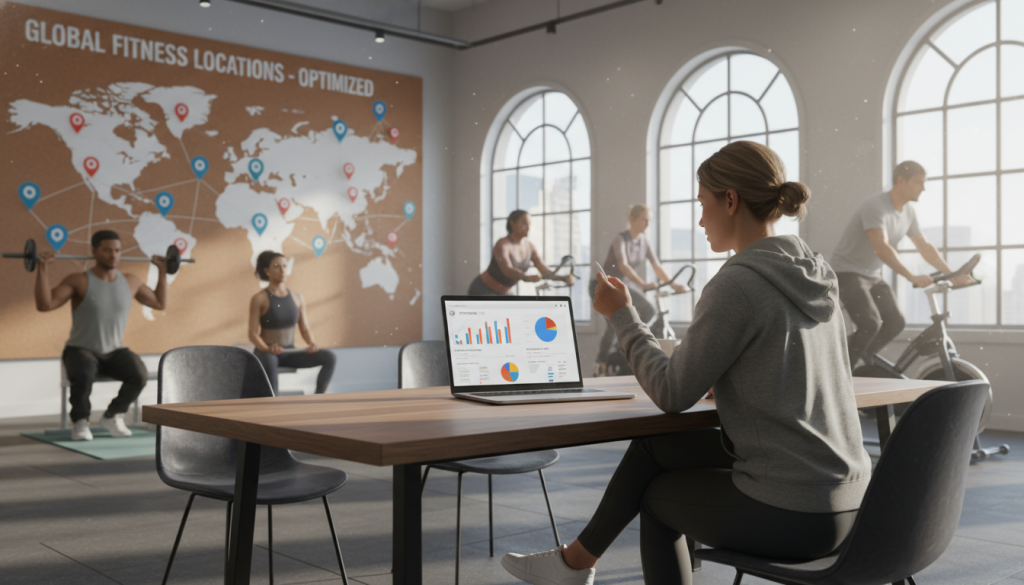
Strong listings also support fitness club seo optimization because they reinforce who you are, what you offer, and where you’re located. That clarity helps both map results and standard local search, especially when people search “near me” or by neighborhood.
Setting Up Your Google My Business Profile
Start by claiming your Google Business Profile and filling out every field: name, address, phone number, website, hours, and services. Choose the best primary category, add helpful secondary categories, and write a plain, specific description that matches what members ask for.
Upload high-quality photos of your equipment, training floor, locker rooms, and classes. Treat the profile like a second homepage and post updates on a steady weekly rhythm—promos, events, schedule changes, and new gear. If you want a clear framework for local SEO services, focus on accuracy, activity, and a clean match between your profile and your website pages.
Importance of Online Reviews
Reviews influence both rankings and decisions. BrightLocal reports that 87% of consumers read online reviews for local businesses, and gyms are no exception. Ask happy members right after a milestone—like a first month completed or a personal record—when the experience is fresh.
Respond to every review with a calm, professional tone, including the tough ones. Thoughtful replies show service quality and help search engine optimization for gyms by signaling trust and engagement.
Listing in Local Directories
List your gym on trusted platforms like Yelp, Facebook Business, Better Business Bureau (BBB), ClassPass, and Mindbody. Keep your NAP identical everywhere—same spelling, same suite number format, same phone number. Consistent citations reduce confusion and strengthen local signals that support fitness club seo optimization.
| Listing Signal | What to Keep Consistent | Why It Helps Local Visibility | Quick Check |
|---|---|---|---|
| NAP accuracy | Exact business name, address format, phone number | Builds trust across platforms and reduces mismatched data | Match your website footer to every directory entry |
| Categories and services | Primary category, secondary categories, service list | Improves relevance for “near me” and service-based searches | Confirm your top services appear on both GBP and site pages |
| Photos and activity | Fresh images, posts, and updates | Shows the gym is active and helps shoppers picture the space | Add new photos after events, upgrades, or seasonal promos |
| Review management | Steady review flow and timely responses | Boosts confidence and supports gym marketing seo through stronger engagement | Set a weekly routine to request and respond |
On your website, weave in real local intent—service plus city, plus nearby areas—so your listing and pages tell the same story. Location-specific pages work best when each one has unique class details, parking info, and nearby landmarks. That alignment turns local listings into a steady lead source without piling on extra content.
Building Backlinks to Improve Authority
Backlinks are one of the clearest signals that your gym is trusted online. For fitness center seo, a link from a respected local site can act like a public nod that your programs and trainers are worth checking out.
This is off-page SEO in action. It supports your reputation beyond your own website, which is why many seo services for fitness industry plans treat link earning as a long-term asset, not a quick win.
Understanding Backlinks and Their Value
In plain terms, a backlink is a clickable link from another website to yours. Search engines read those links like “votes of confidence,” and they can lift domain authority when the source is credible and relevant.
Bad links can do the opposite. Google’s Penguin updates and manual reviews may flag spammy patterns, so seo strategies for gyms work best when links look natural, earned, and tied to real community value.
Strategies for Acquiring Quality Backlinks
Focus on quality over volume. A single mention from a local news outlet or a well-known wellness blog can beat dozens of low-value directory links, especially when the anchor text matches the page topic without stuffing.
Practical options include guest posts on lifestyle publications, parenting sites, and fitness blogs, plus real press coverage for milestones like a new location, an award, or a unique youth fitness program. If you want deeper guidance on staying safe while building authority, this ethical backlink building guide lays out what tends to trigger penalties and what builds steady trust.
- Guest blogging with a relevant in-content link or a short author bio link
- Press releases tied to real news, picked up by local outlets and industry publications
- Sponsorships and events like 5Ks, charity yoga, and health fairs that list partners online
- Directories such as Yelp and Yellow Pages, plus health and wellness directories in your area
Collaborations and Partnerships for Link Building
Partnerships can turn link building into a repeatable habit. Cross-promote with massage therapists, chiropractors, and healthy cafés by creating a co-branded class, a recovery guide, or a wellness bundle that both sites feature.
Local influencers and personal trainers can support this, too, through interviews, guest content, or event recaps that earn mentions and referral traffic. Done well, it strengthens fitness center seo while keeping your link profile diverse, which many seo services for fitness industry teams prioritize to avoid sudden spikes.
| Link source | What you publish or do | Why it helps | How to keep it safe |
|---|---|---|---|
| Local wellness or lifestyle blog | Guest post on recovery, mobility, or beginner strength | Topical relevance and strong authority signals | Use natural anchors (brand + topic), avoid keyword stuffing |
| Local news outlet or community paper | Press release for openings, awards, or new programs | High trust mentions and steady referral traffic | Only pitch real milestones; skip paid link placements |
| Event organizer sites (5Ks, health fairs) | Sponsor, host a booth, or lead a warm-up session | Earned links from partner pages and recaps | Prioritize community fit; avoid link networks |
| Business directories (Yelp, Yellow Pages) | Complete profiles with consistent NAP details | Local discovery plus basic backlink diversity | Stick to reputable directories; keep info consistent |
| Partners (chiropractors, massage, healthy cafés) | Co-branded content or joint event landing page | Highly relevant local links and qualified leads | Link to helpful pages, not just the homepage |
Social Media and Its Impact on SEO
Social media won’t replace your website, but it can amplify what you publish there. When posts get saved, shared, and talked about, more people search your brand by name and visit your pages. That extra attention supports gym marketing seo and helps your content earn mentions that can lead to real backlinks over time.
Think of Google Business Profile posts as a social channel, not a one-time setup. Regular updates on offers, new equipment, or schedule changes can keep your listing fresh in local results. That steady activity supports fitness club seo optimization because it reinforces trust signals prospects look for before they walk in.
Choosing the Right Platforms for Your Gym
Pick platforms based on what your members already use and how they like to learn. Instagram works well for photos, short videos, and quick tips. Facebook is strong for events, community updates, and local groups, which can spark shares and drive searches that support seo for fitness gyms.
If you run a class-heavy schedule, highlight formats that fit each channel. For example, a 15-second coaching cue plays well on Instagram, while a longer event post can live on Facebook. Keep the look and tone consistent so people recognize you fast across the feed and search results.
Engaging Content Strategies on Social Media
Use your best website content more than once. Turn a long blog into a short video, a simple infographic, or a carousel-style breakdown. This keeps your workload sane while still pushing steady traffic, which supports gym marketing seo through more branded interest and repeat visits.
- Promotions tied to a clear start date and simple terms
- Events like open houses, challenges, and charity workouts
- Class schedules with weekly reminders and last-minute changes
- Success stories that focus on habits, not hype
- Coach Q&As that answer common beginner questions
Keep captions clear and direct, then point viewers to one next step, like booking a tour or checking the schedule. This kind of steady, helpful posting supports fitness club seo optimization because it increases engaged traffic, not just impressions.
Leveraging User-Generated Content
User-generated content adds proof that your gym feels real and active. Ask members to share class photos, quick testimonials, or a training milestone, then reshare with permission. That public community energy often improves conversion because prospects can see coaching quality and culture before they visit, which supports seo for fitness gyms.
UGC also pairs well with reviews. When members post a win on social and then leave a short review, it builds momentum and trust in the same week. In a local market, that visible activity can strengthen gym marketing seo by nudging more people to search, compare, and choose your gym.
| Channel habit | What to post | SEO impact you can expect | Simple cadence |
|---|---|---|---|
| Google Business Profile posts | Schedule updates, offers, event recaps, new services | More profile actions and stronger local credibility for fitness club seo optimization | 1–2 posts per week |
| Short videos, carousels, member wins, coach tips | More shares and saves that increase brand awareness and support seo for fitness gyms | 3–5 posts per week | |
| Events, community updates, announcements, group discussions | More local engagement and referral traffic that reinforces gym marketing seo | 2–4 posts per week |
Tracking Your SEO Progress and Adjustments
SEO for a gym is never “set it and forget it.” Demand shifts fast in the U.S., from New Year’s resolutions to summer cut season. A simple rhythm works best: track, learn, and tune your gym website seo so your pages keep matching what people search for.
Key Metrics to Monitor
Start with an audit mindset and watch the basics that move revenue. In Google Analytics, review organic traffic to local landing pages, bounce rate, dwell time, and conversion rate for trial bookings, class sign-ups, and membership inquiries. In Google Search Console, track rankings, impressions, and CTR, then fix crawl traps, indexing errors, duplicate URLs, and redirect chains that can slow search engine optimization for gyms.
Tools for SEO Analytics
Use Screaming Frog for broken links and canonical conflicts, plus Google PageSpeed Insights and GTmetrix for Core Web Vitals like LCP, INP, and CLS on mobile. If you want deeper reporting, SEO PowerSuite and WebSite Auditor help spot architecture gaps, orphan pages, and internal linking depth. Pull it into Looker Studio so monthly trends are easy to compare and you can see what helps improve gym website ranking.
Making Continuous Improvements
Turn findings into a short priority list based on impact and risk: fix indexing and crawl issues first, then performance bottlenecks, then template consistency and trust signals like HTTPS and structured data. Keep it ongoing, not one-time, so new pages follow the same rules as your site grows; a technical SEO audit can help you measure progress across crawlability, indexation, site architecture, speed, and trust. Tie results back to business by matching content engagement with bookings in your gym software, then refresh pages and keywords as intent changes—this is how gym website seo supports search engine optimization for gyms and helps improve gym website ranking over time.
FAQ
Why is SEO for fitness gyms a must-have in 2025?
In 2025, most prospects search on Google before they ever visit a facility. If your gym isn’t showing up on page one, you’re often invisible to high-intent local searches. In a competitive U.S. market, strong gym marketing SEO helps you get discovered instead of buried on page two.
What is Search Engine Optimization (SEO) for gyms?
A: Search Engine Optimization (SEO) is the practice of improving your website’s visibility and ranking in search engine results pages (SERPs) to increase the quantity and quality of organic (non-paid) traffic from platforms like Google. For gyms, that means turning searches into actions like trial bookings, class sign-ups, and membership inquiries.
Isn’t launching a website enough to get new members?
A website is the starting point, not the finish line. Ongoing search engine optimization for gyms helps your pages rank higher, attract better-fit visitors, and convert more of them into leads. It also builds brand awareness so prospects recognize your gym before they compare options.
How does fitness center SEO differ from general SEO?
Gyms depend on nearby customers and location-driven intent. Fitness center SEO focuses on local visibility, Maps rankings, and conversion paths that match a membership model. It’s less about broad traffic and more about high-intent prospects ready to visit, book, or join.
Why does local SEO matter so much for gyms?
Local search drives real foot traffic. 46% of all Google searches are local, and 72% of customers searching for local businesses visit within a week. On mobile, it’s even stronger: 88% of consumers who do a local search on a smartphone visit a related store within a week.
What are the core parts of fitness club SEO optimization?
It includes on-page optimization (content, keyword usage, meta tags, site structure), off-page optimization (backlinks and online reputation), technical SEO (speed, mobile friendliness, crawlability, indexing), content creation (helpful answers to real questions), and user experience (UX) (fast, simple navigation to schedules, classes, and memberships).
What are the real business benefits of gym website SEO?
Strong gym website SEO can increase online visibility, bring in more targeted traffic, and improve user experience with faster load times and mobile-friendly layouts. It also builds authority through trainer credentials, certifications, and testimonials. Over time, it becomes a cost-effective alternative to relying heavily on paid ads.
How do I choose the right keywords for seo for fitness gyms?
Start with how people actually search for gyms in your area, then match pages to that intent. Common patterns include “best gym in [city],” “personal training near me,” “yoga classes in [city],” and “fitness gym near me.” Buyer-intent modifiers like “join,” “sign up,” “cost,” “trial,” “best,” and “near me” often signal visitors who are close to booking.
Which tools help with U.S.-focused keyword research and competitive analysis?
Popular tools include Google Keyword Planner for search volume and ideas, plus SEMrush and Ahrefs for competitive opportunities. Tools like Rank Tracker and RankDots help assess difficulty and intent. The Writesonic SEO AI Agent Tool can also speed up keyword discovery by streamlining volume and competition checks.
Should gyms only target high-volume keywords?
Not always. Volume matters, but so do keyword difficulty (KD) and search intent. Lower-volume, high-intent searches often convert better than broad terms because the searcher already knows what they want.
What are examples of long-tail keywords that can drive qualified gym leads?
Long-tail keywords are more specific and often easier to rank for. Examples include “women-only gym with personal training in [city]” and “24-hour gym with sauna near [neighborhood].” Some gyms also target niche visibility with phrases like “SEO for gyms in [city],” plus adjacent audiences such as “exercise equipment SEO” and “SEO fitness apps.”
How can competitor keyword analysis help improve gym website ranking?
By plugging competing gyms into tools like Rank Tracker, SEMrush, or Ahrefs, you can see what they rank for and which pages pull traffic. The goal is to spot gaps you can own with new service pages, blog topics, and location landing pages. That’s a practical way to improve gym website ranking without guessing.
What “small but strategic” on-page changes make a difference for gym sites?
On-page SEO is often about details that improve both rankings and usability. Clear headings, clean page structure, and content that answers common questions help Google understand your pages. They also help prospects quickly find what they need to take action.
What website structure works best for seo strategies for gyms?
Use clean, descriptive, keyword-rich URLs like /personal-training and avoid parameter-heavy URLs like ?id=123. Use hyphens between words and keep the structure simple. Each page should have one H1, then H2 and H3 headings that make the content easy to scan for both users and search engines.
How should gyms approach title tags and meta descriptions?
Title tags work best when they include the primary keyword, clearly communicate value, and stay under about 60 characters to reduce truncation. Meta descriptions are typically around 150–160 characters and should read like a mini-ad with a clear call to action. Even when they don’t directly change rankings, they can improve click-through rate.
What kind of content supports seo services for fitness industry goals?
The best content answers real questions and matches different intents, from “finding a gym” to “comparing options” to “learning basics.” Effective formats include workout tips, nutrition advice, class schedules, and success stories. A consistent blog can also cover topics like how to choose the right gym for your goals, nutrition tips, or the benefits of specific exercises.
How important is image and video optimization for gyms?
Fitness is visual, so image and video SEO matter. Use descriptive file names (not default camera names), add keyword-relevant alt text, and compress files to improve load time. Strong visuals can also showcase equipment, classes, and real results that help visitors feel confident about booking.
How does UX affect conversions for fitness sites?
UX is a major conversion driver. Visitors should be able to find class schedules, membership options, and contact details fast, especially on mobile. A smooth experience increases trial bookings, inquiries, and sign-ups, which is a key goal of fitness club SEO optimization.
What should a gym include in a Google Business Profile?
Claim the profile and complete every field: name, address, phone number (NAP), website, hours, and services. Add the right categories, write a strong business description, and upload high-quality photos of equipment, classes, and the facility. Many gyms treat Google Business Profile as a second homepage because it influences Google Maps visibility.
How often should gyms post updates to Google Business Profile?
A weekly rhythm works well for many gyms. Share promotions, events, class schedules, new equipment, and success stories. Regular activity signals that the business is active and gives prospects more reasons to click or call.
Do online reviews really impact gym website SEO and conversions?
Yes. Reviews influence trust and can affect local visibility and click behavior. BrightLocal reports that 87% of consumers read online reviews for local businesses. Encourage happy members to leave reviews and respond professionally to both positive and negative feedback.
Which directories should gyms list on for better local visibility?
Common options include Yelp, Facebook Business, and the Better Business Bureau (BBB). Many gyms also benefit from fitness-specific platforms like ClassPass and Mindbody. These listings can support local discoverability and reinforce trust signals.
Why does NAP consistency matter for search engine optimization for gyms?
NAP means name, address, and phone number. Keeping NAP identical across your website, Google Business Profile, and directories helps search engines trust that your business data is accurate. That consistency supports stronger local rankings and fewer lost leads from wrong contact details.
What are backlinks, and why do they matter for gyms?
Backlinks are links from other reputable websites to your site. They act like votes of confidence and can improve domain authority, which helps gym pages rank higher. For gyms, backlinks also support reputation and legitimacy in a category where trust is a big factor.
What are practical ways for gyms to earn quality backlinks?
Common tactics include guest posts on local wellness blogs, parenting sites, lifestyle publications, and fitness websites. Press releases can also help when they’re tied to real milestones like a new location, an award, or a unique program. Sponsoring events like 5Ks, charity yoga, and health fairs often earns links from organizers and local media.
How can partnerships generate links and local authority?
Partnerships create a repeatable link engine. Gyms often collaborate with massage therapists, chiropractors, and healthy cafés on co-branded events, wellness bundles, or shared content. These relationships can drive relevant local links and send referral traffic that’s already aligned with your services.
Can influencer collaboration support fitness center SEO?
Yes. Local fitness creators, coaches, and trainers can help with features, guest content, and mentions that build awareness and authority. Even when links aren’t always followed for SEO value, the exposure can drive branded searches and qualified site visits.
Does social media directly improve rankings?
Social is usually an indirect amplifier. It increases reach, helps content get shared, and can lead to more reviews, mentions, and link-worthy visibility. Many gyms also use Google Business Profile posts alongside platforms like Instagram and Facebook to keep engagement strong across channels.
What social content helps support seo for fitness gyms outcomes?
Repurpose long-form website content into short videos, carousels, and simple graphics so you can publish consistently without doubling your workload. Promotions, events, class schedules, success stories, and trainer Q&As often drive engagement. That visibility can increase branded search and steady traffic to high-converting pages.
How should gyms use user-generated content (UGC)?
Encourage members to share transformation stories, class photos, and testimonials, then reshare with permission. UGC acts as social proof, supports community trust, and often boosts review velocity. Those trust signals can help prospects feel safe and confident before visiting.
Why should gyms treat SEO as continuous instead of a one-time project?
Search behavior changes, algorithms shift, and fitness demand is seasonal. Continuous SEO helps you track performance, adjust what isn’t working, and build momentum that compounds over time. It’s also a long-term, cost-effective alternative to relying on paid ads for every lead.
What should a gym SEO audit check first?
Start by reviewing current performance and identifying quick wins. Check organic traffic and conversion rates in Google Analytics. Use Google Search Console and Screaming Frog to find broken links, duplicate content, and indexing errors, then confirm mobile friendliness since many gym searches happen on phones.
What metrics should gyms monitor to know if SEO is working?
Track organic traffic growth, especially to location landing pages. Watch keyword rankings, impressions, and click-through rate (CTR). Monitor bounce rate and dwell time for relevance and UX signals, and measure conversion rate tied to form fills, trial bookings, class sign-ups, and membership inquiries.
Which tools help track technical and local performance over time?
Many gyms use Google Analytics and Google Search Console for traffic and search visibility. For speed and performance, Google PageSpeed Insights and GTmetrix are common. Tools like SEO PowerSuite and WebSite Auditor support deeper audits, while Looker Studio can pull key metrics into monthly dashboards.
How can gym management software and gym marketing software support SEO results?
These platforms can connect marketing activity to operational outcomes. When you can see which pages drive class bookings, which offers convert, and where leads drop off, you can refine content and conversion paths. That insight can supercharge seo services for fitness industry efforts by tying SEO work to real revenue signals.
Should boutique studios and large chains use the same seo strategies for gyms?
The foundations are the same, but execution changes based on scale. Boutique studios often win with niche positioning and highly local terms, while chains benefit from location-specific landing pages and consistent listings across markets. In both cases, the goal is local discoverability and high-intent traffic that becomes foot traffic.
What’s the fastest way to start seeing traction with fitness gym near me searches?
Focus on local fundamentals that influence Maps and local results. A complete Google Business Profile, consistent NAP across directories, strong reviews, and clear location signals on your site all help. Combined with solid on-page content, this approach supports fitness center seo gains that translate into calls, visits, and bookings.
What are common mistakes that hold back gym website SEO?
Common issues include slow mobile performance, thin service pages, inconsistent NAP listings, and unclear conversion paths. Keyword stuffing can also hurt readability and trust. Fixing technical issues, improving content quality, and strengthening local signals are often the fastest path to better results.
