
Companies that rebalance territories well can see a 2%–7% revenue lift, Harvard Business Review found. This small change can add up quickly. It shows that generated sales are not just luck, but a system you can grow.
Think of generated sales as a method to turn market interest into steady income. It involves forecasting, go-to-market strategy, territory design, sales motion, measurement, and retention. You set clear goals, align sales and marketing, build a structure, and train your team. Then, you measure what’s important and make adjustments. This way, you can increase sales without wasting resources.
Real-world examples show the power of generated sales. Bright Horizons, for example, shifted to serve essential workers during COVID-19. This move helped protect their revenue by quickly identifying new demand. Companies like Vonage and Nielsen assess forecasts more often, rethink their go-to-market strategies, and optimize territories.
Startups that focus on revenue first have a big advantage. It reduces funding risk, attracts investors, and supports growth. Models like Dropbox, Slack, and Netflix show how freemium and subscriptions can work. By optimizing pricing and funnels, you can create generated sales that boost revenue and drive growth.
Understanding Generated Sales: A Comprehensive Overview
Generated sales are not just one-time wins. They are ongoing revenue from a well-planned system. This system combines marketing, selling, and planning to turn demand into income. Teams work together, set goals, and track what works best to boost sales over time.
During big changes like a pandemic, economic shifts, or currency changes, generated sales shine. Companies like Vonage and Nielsen adjusted their plans, updated their pipelines, and found quick deals. This shows how a structured approach can quickly spot risks and opportunities.
What Are Generated Sales?
They come from a repeatable process. This process includes forecasting, managing pipelines, adapting to markets, and keeping customers. It connects goals to actions, uses best practices, and trains teams to maintain high standards.
In action, this means having clean CRM data, clear territory plans, and smooth handoffs between marketing and sales. It also means tracking win rates, cycle length, and average deal size to get better with each cycle.
Companies like Bright Horizons and TentCraft used this approach to find new opportunities. When needs changed, they adjusted their offers, messages, and sales channels without losing speed.
Why Generated Sales Matter for Your Business
They help keep cash flow steady and support through tough times. Startups often fail due to cash flow issues; a solid revenue plan builds trust with investors and supports growth. With generated sales, leaders can quickly identify and fix gaps, moving resources with confidence.
Forecasting and quick feedback loops make a big difference. Vonage focused on urgent work-from-home deals using CRM insights. Nielsen doubled its forecast updates and re-engaged buyers with virtual events. These actions come from clear sales strategies aimed at improving performance in real time.
In fast-changing markets, a structured approach is key. Teams align goals, measure important metrics, and keep sales growing through change.
Identifying Your Target Audience Effectively
Knowing your audience well is key to making sales. First, figure out who buys, why they buy, and where demand is high. Use this info to make your sales process better and boost sales everywhere.
Salesforce teams divide by industry and location to meet demand and build expertise. They match territories based on shared needs. Then, they customize messages and prices for each group. This keeps the message clear and boosts sales.
Demographics and Psychographics
Combine age, income, and role with values, pains, and habits. For example, Nike focuses on women’s sports because 40 percent of their audience is female. Use psychographics to show how your product solves their problems.
Most consumers want personalized experiences, and segmenting can really increase sales. Yet, many marketers don’t know much about their customers beyond basic info. Learn more about targeting your audience here: target audience in marketing.
Watch for changes in your market. Podium shifted to restaurant takeout, and TentCraft made healthcare tents. These changes helped them sell more and improve their sales process.
Tools for Audience Research
Keep your CRM data up to date and requalify deals for a full view, like Vonage did. Use third-party research to track prospects and competitors. This reduces uncertainty and boosts sales.
- Mapping: Salesforce Maps, used by De Nora, shows where to focus.
- Virtual feedback loops: Nielsen went digital when events stopped, getting new insights.
- Startup analytics: Use views and feedback from Dropbox, Slack, and Notion to see what works.
Use these tools to score segments based on intent, deal size, and time. Use this info to plan territories and messages. This will help you sell more, improve your sales process, and grow your sales over time.
Crafting a Compelling Value Proposition
A sharp value proposition grabs buyers’ attention. It guides your team’s messages, aligns prices with results, and boosts sales. A clear and credible value proposition maximizes sales and drives revenue without unnecessary noise.
Key Components of a Value Proposition
Customer pain clarity: Describe the exact problem in the customer’s words. Use frontline insights to show you understand, then link it to a measurable impact.
Differentiated outcomes: Highlight what only you offer—like speed, accuracy, or risk reduction. Explain how these outcomes increase conversions across different channels.
Proof of value: Provide specific evidence—such as case metrics, demos, or live benchmarks. Tools like Salesforce Sales Cloud help reps offer personalized proof.
Clear path to ROI: Outline the steps from first use to payback. Explain time-to-value, adoption support, and milestones that lead to sustained sales.
- Insight selling: Train reps to turn customer insights into concise, tailored recommendations that remove obstacles.
- Pricing-linked value: Reposition bundles and premium services to match outcomes, not features. This way, buyers see cost as an investment.
- Value ladders: Tiered, value-based, or usage pricing helps buyers self-select. Clear tiers can increase conversions while protecting margins.
Examples of Effective Value Propositions
Podium enabled text-based ordering, payment, and pickup for restaurants. It kept revenue flowing with an efficient takeout workflow. A local bakery captured 600 leads in two weeks, turning inbound interest into sales.
TentCraft reframed event tents as rapid deployment infrastructure for drive-through health screenings. They promised fast setup, durable materials, and reliable logistics for urgent operations.
Bright Horizons provided child care for essential workers, ensuring continuity for frontline staff. This ensured a clear, human-centered outcome that helped employers increase benefits adoption and retain key talent.
- Show the pain in numbers, not adjectives.
- Tie features to outcomes and time-to-value.
- Use tiers—like Slack or Zoom—to guide upgrades and grow sales.
Leveraging Content Marketing for Sales Generation
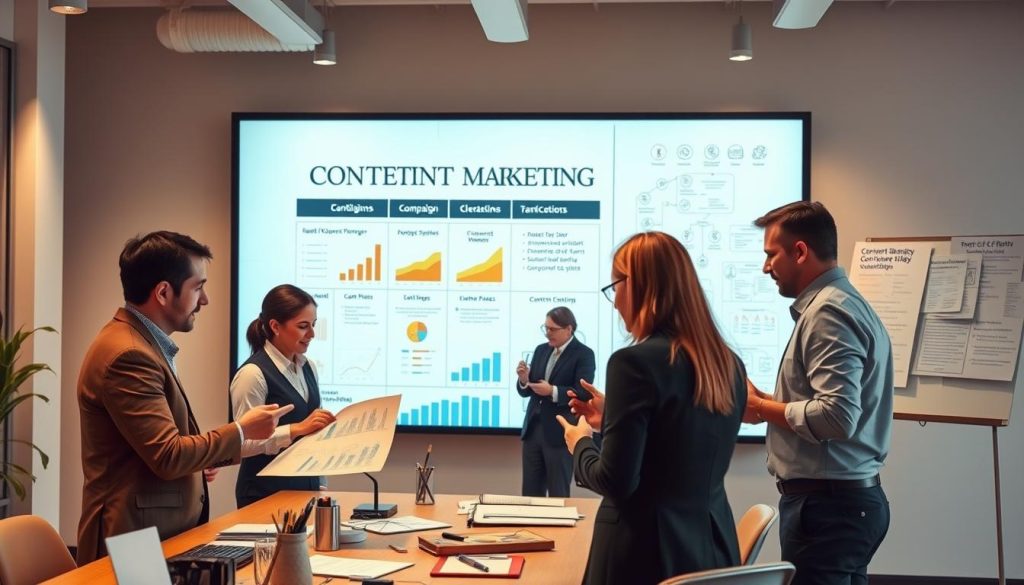
Content that solves real problems is key to making sales. It helps buyers move from first contact to signing a deal. It also grows sales by sharing clear, useful ideas. When it matches what buyers are looking for, it turns readers into customers.
Make content measurable, reusable, and mapped to each stage of the funnel. Plan topics with revenue in mind, not just for clicks. Then, promote it well so each piece gets seen and moves deals along.
Types of Content That Drive Sales
Create a library that answers how, why, and how much. Use formats that show proof and speed up decisions. Each piece should help make sales and make it easier for buyers to move forward.
- Industry playbooks that outline repeatable steps for a niche. Practical guides turn curiosity into action and drive sales growth with clear next steps.
- Case studies with real brands: Vonage on forecasting accuracy; Podium on bakery lead gains; TentCraft’s healthcare use case; De Nora’s territory expansion. Proof fuels trust and accelerates sales generation strategies.
- Webinars and virtual events that replace lost live events, as seen in Nielsen’s shift to digital briefings. Recordings extend reach and nurture slow-cycle deals.
- Product-led content like onboarding guides that cut time-to-value and reduce churn, reinforcing revenue from existing customers.
- Pricing explainers aligned to value-based or tiered models. Transparent math reduces objections and boosts generated sales at the decision stage.
Best Practices for Content Promotion
Great content needs strong promotion to succeed. Use targeted promotion to grow sales and keep the pipeline moving.
- Practice social selling on platforms where buyers engage. Share insights, not pitches, and activate internal networks to open doors with warm context.
- Run joint webinars, co-marketing, and affiliate programs with strategic partners to tap qualified audiences fast. This scales sales generation strategies without ballooning spend.
- Integrate across the funnel: retarget visitors with related assets, nurture with email sequences, and recover abandoned carts with timely proof points.
- Measure impact on pipeline and stage progression. Track how assets influence forecast, and use activity challenges with real-time leaderboards to lift prospecting volume across teams.
| Content Type | Primary Goal | Best Channel | Funnel Stage | Key Metric | Revenue Impact |
|---|---|---|---|---|---|
| Industry Playbook | Educate and qualify | LinkedIn, email | Top/Mid | Engaged accounts | More generated sales from informed prospects |
| Case Study (Vonage, Podium, TentCraft, De Nora) | Prove outcomes | Website, sales enablement | Mid/Bottom | Opportunity conversion | Drive sales growth via faster consensus |
| Webinar/Virtual Event (Nielsen-style) | Capture demand | Live stream, replay | Top/Mid | Attendee-to-MQL rate | Steady pipeline for sales generation strategies |
| Onboarding Guide | Time-to-value | In-app, help center | Post-sale | Activation rate | Retained revenue fuels generated sales compounding |
| Pricing Explainer | Reduce friction | Website, sales decks | Bottom | Win rate | Shorter cycles and higher ACV |
Utilizing Social Media to Boost Generated Sales
Social media works best when it matches how buyers find, think about, and buy things. Make sure your content matches their needs, post regularly, and check what works. This way, social media can help increase sales, reach more people, and improve performance without spending too much on ads.
Choosing the Right Platforms
For B2B, focus on LinkedIn and X (formerly Twitter). Share thought leadership, buyer-centric threads, and social selling to start conversations. Use LinkedIn Sales Navigator to focus on the right accounts and track sales back to your CRM.
For B2C, use Instagram and TikTok for product discovery. Short demos, try-ons, and Reels show benefits quickly. Try influencer partnerships and affiliate programs to reach more people, then track referrals to see what works.
Keep your content valuable. Share case studies, invite people to virtual events, and update about products. Co-brand with partners like Shopify or HubSpot to gain trust and reach new audiences.
Engaging with Your Audience
See social selling as a serious way to find new customers. Create prewritten messages for comments, DMs, and follow-ups. Use likes, poll votes, and webinar signups to know when to reach out and turn interest into sales.
Host live Q&As on LinkedIn Live, Instagram Live, or YouTube. This lets you address concerns right away. Turn these into clips and carousels to answer common questions and boost sales.
Focus on what matters. Track how social media helps with sales in your CRM. Look at how different groups perform to see where to improve next.
The Role of Email Marketing in Sales Generation
Email is a direct way to drive sales growth. It works best when it offers clear value at the right time. When done right, it turns attention into action, boosts conversions, and grows sales without waste.
Building a Quality Email List
Start by building trust. Convert visitors from guides, demos, and free trials. Hosting webinars with partners like Nielsen can attract the right subscribers.
Use useful assets with clear terms and double opt-in to verify intent. Make sure your sales team can follow up quickly to avoid pipeline fatigue.
Use progressive forms to get more information over time. Confirm job role, industry, and buying stage to tailor your outreach. This approach drives sales growth instead of just making noise.
Crafting Effective Email Campaigns
Avoid generic emails. Follow Tiffani Bova’s advice to deliver insight and value in each email. Use automated sequences for onboarding, nurturing, and reactivation, including abandoned cart recovery.
Segment your emails by industry, buyer stage, and cohort. Tie messages to fresh forecasting signals and market shifts. For example, use Nielsen’s event data to make your offers more relevant.
Test your subject lines, preview text, and offers. Align them with your pricing strategy. This way, each email nudges sales with a clear next step.
| Tactic | Primary Goal | Key Metric | Optimization Tip | Business Impact |
|---|---|---|---|---|
| Webinar-to-Email Capture (Nielsen virtual events) | Qualified list growth | Verified opt-ins | Ask role/industry in follow-up form | Fuels targeted nurtures to drive sales growth |
| Abandoned Cart Series | Recover lost revenue | Recovered orders | Test urgency copy and incentives | Immediate lift that boosts conversions |
| Industry Segmentation | Relevance at scale | Click-through rate | Map pain points to use cases | Higher intent and more generated sales |
| Lifecycle Nurtures | Shorten time to value | Activation rate | Stagger education with product tips | Better onboarding and upsell paths |
| Activity Tracking (calls/emails/meetings) | Sales-marketing sync | Meetings set from email | Gamify targets, as McAfee did | Predictable motion that drives sales growth |
Pro tip: Keep your email schedule consistent, your copy clear, and your CTAs direct. Each email should earn the next open, increase engagement, and grow sales over time.
Implementing SEO Strategies for Increased Visibility
Smart SEO helps the right buyers find you. It ties search intent to your sales funnel. This drives sales growth and captures qualified traffic without spending too much on ads.
Focus on pages that convert. Every click should help increase sales.
Keyword Research for Sales Growth
Begin by matching keywords to intent: learn, compare, and buy. Use tools like Google Search Console and SEMrush to find rising demand in areas like logistics and cybersecurity. Align your keywords with your ideal customer profile and region to boost sales.
Create content around pricing comparisons and subscription benefits. Target terms like “best” and “cost” for mid- and bottom-funnel prospects. This strategy keeps your content relevant to buyer searches.
Use your keyword research to forecast sales. Track which terms add to your pipeline in tools like Salesforce. Update your list monthly to stay ahead of market changes.
On-Page and Off-Page SEO Techniques
Build industry landing pages and persona playbooks. Lead with a clear value proposition and conversion-focused CTAs. Use concise headings and fast load times to drive sales.
Show social proof with verified reviews and customer logos. Keep your copy plain and benefit-led. This turns visitors into sales.
For off-page success, pitch guest posts and run co-marketing with partners. Earn backlinks through affiliate programs and PR. Align announcements with brand repositioning to boost revenue and reach.
- Partnerships: joint webinars, ebooks, and case studies for shared audiences.
- Digital PR: product updates, research releases, and expert commentary for authority.
- Affiliate: curated networks that can drive sales growth with trackable links.
Close the loop with a feedback system. Attribute rankings and clicks to opportunities and closed-won revenue. Update content and re-forecast often in fast-moving markets to keep SEO driving sales and revenue.
Harnessing the Power of PPC Advertising
PPC lets you meet demand in the right place, at the right time. Start where intent is high and budgets can fuel generated sales without waste. Keep your message tight, your path to purchase short, and your data clean to boost conversions and optimize sales process.
Setting Up Your PPC Campaigns
Map segments and regions where demand is strongest. Use geo-targeting to mirror real hotspots, then match keywords and audiences by buyer stage. Align ad copy with updated use cases seen across the market, such as Podium enabling takeout or TentCraft serving healthcare needs.
Build ad groups around clear themes. Reflect your value proposition and pricing tiers in both ads and landing pages. Keep post-click pages fast, skimmable, and tied to one goal to drive generated sales and boost conversions.
Set budgets only where sales coverage exists. If your reps or account teams are at capacity, cap spend until coverage returns. Layer remarketing with email nurtures so visitors see consistent offers as you optimize sales process.
Measuring PPC Success
Track pipeline created, forecast impact, and conversion by stage. Watch velocity from first click to meeting set, then to opportunity. If drop-off rises on a page, test a tighter headline, simpler form, or stronger proof to boost conversions.
Run cohort analysis by channel and team. Compare SDR and AE win rates on PPC-sourced leads, as Vonage did, to find lift or leaks. Review geo and segment results weekly; increase your forecast cadence in volatile periods to protect generated sales and optimize sales process.
- Core metrics: Cost per qualified lead, stage-to-stage conversion, and time-to-first-response.
- Quality checks: Landing page match to query, message consistency, and sales acceptance rate.
- Iteration loop: Pause weak segments, shift budget to winners, refresh creative and bids.
Building Trust Through Customer Reviews and Testimonials
People buy when they believe. Real results from real customers help boost conversions and drive sales. Lead with proof and let your happiest users speak first.
Make trust visible across every channel—landing pages, ads, email, and sales decks—so evidence backs every claim.
The Impact of Social Proof
Social proof reduces doubt and shortens the path to “yes.” It gives buyers confidence, which helps boost conversions in SEO, PPC, and email flows.
Use outcomes that tie to ROI. Podium reported adding 600 leads in two weeks. TentCraft showcased rapid healthcare deployments. Vonage improved forecast accuracy. These specifics lift authority and enhance profitability.
Share quotes near pricing to support value. This can strengthen pricing power and reposition your brand toward results, not features, fueling generated sales.
How to Collect and Showcase Reviews
Ask at clear milestones: after onboarding, first value moment, and quarter-end. Automate requests via your CRM so wins become public proof. Keep prompts short and mobile friendly.
- Offer guided questions about outcomes, time saved, or revenue impact.
- Secure permission to use names, brands, and roles for credibility.
- Record source, date, and metrics to maintain accuracy.
Place testimonials on product pages, checkout, and high-intent landing pages to boost conversions. Add them to nurture emails, webinar slides, and proposals to support generated sales across the funnel.
Improve findability with structured data for ratings. In PPC, use extensions and benefit-led copy. Feed insights back into product and service so reviews get better over time, which can enhance profitability.
| Channel | What to Showcase | Execution Tip | Business Impact |
|---|---|---|---|
| Landing Pages | Outcome-focused quotes with metrics (leads, time saved) | Place near CTAs and pricing blocks | Boost conversions at decision points |
| Product Pages | Use-case snippets and ratings | Add structured data for visibility | Support generated sales from organic and paid |
| Email Nurtures | Customer wins tied to ROI | One proof per email with a clear next step | Reinforce value and enhance profitability |
| PPC Ads | Review extensions and proof points | Mirror claims on the landing page | Raise quality score and boost conversions |
| Sales Proposals | Industry-matched case results | Include a concise ROI sidebar | Accelerate buy-in and generated sales |
Optimizing Your Sales Funnel for Maximum Efficiency
Optimizing each step in the sales process boosts efficiency. A streamlined path leads to better sales performance. It turns interested customers into actual buyers with less effort.
Map the journey, standardize the handoffs, and coach the moments that matter. Making small improvements at each stage can lead to significant gains. Each stage should have clear goals, tools, and signals.

Stages of the Sales Funnel
Awareness: Use content, SEO, PPC, and social media to spark demand. Publish guides, target keywords, and pair ads with strong landing pages. This sets the pace for better sales performance early on.
Consideration: Host webinars, share case studies, and offer trials. Make it easy to compare options and see value. Clear proof builds trust and speeds up sales.
Evaluation: Lead with insight selling. Present proposals with tiered pricing, ROI snapshots, and timelines. Align value metrics to the buyer’s goals for clear sales process clarity.
Decision: Provide closing support and executive alignment. Bring in the CFO or CTO when needed. Fast legal paths and clean order forms reduce friction and improve sales performance.
Retention and Expansion: After go-live, drive adoption, then upsell or cross-sell. Quarterly business reviews surface new use cases that fuel sales without heavy prospecting.
Identifying Bottlenecks
Spot leaks with activity and stage metrics. McAfee used activity tracking and gamification to raise top-of-funnel energy. If checkout abandonments spike—industry research often cites rates near 69%—trigger reminders and timely offers to recover demand.
Tag stalled deals with precise causes. Nielsen tracked canceled events and currency swings to isolate delays. Use dashboards to show time-in-stage, conversion rates, and velocity so teams can optimize sales process priorities.
Upgrade execution with standard prospecting sequences in Salesforce High Velocity Sales. Run mock call competitions and coach with Einstein Call Coaching to sharpen objection handling. Add mentorship to lift business acumen for C‑suite selling and improve sales performance.
Align territories to increase coverage in high-opportunity segments. Harvard Business Review reports a 2%–7% lift from better design, while De Nora’s hot spot visualization guided reps to where generated sales were most likely.
- Signals to watch: low meeting creation, proposal gaps, long legal cycles, weak adoption.
- Fixes to apply: content refresh, offer testing, pricing clarity, faster approvals, success-led expansion.
- Tools to deploy: Salesforce cadences, coaching analytics, pipeline hygiene, stage exit criteria.
Analyzing Data to Improve Sales Strategies
Stronger revenue ops start with clean inputs and fast feedback. A shared view of pipeline, activity, and outcomes helps teams improve sales performance. This focus on buyers leads to better enhanced profitability and generated sales.
Key Metrics to Track
- Pipeline volume and value by stage to spot gaps early and improve sales performance.
- Forecast accuracy trended weekly; raise frequency in volatile markets, as seen at Nielsen with twice-weekly reviews.
- Win rates, sales cycle length, and stage conversion to guide playbook tweaks and enhance profitability.
- Activity counts across emails, calls, and meetings to balance effort with outcomes and lift generated sales.
- MRR/ARR, churn, retention, LTV, and CAC for full-funnel health and pricing insight.
- Cohort performance by rep tenure—such as Vonage cohorts at 0–6, 6–18, and 18+ months—to benchmark ramp.
- Attribution by channel across SEO, PPC, social, email, and partners to scale what works and improve sales performance.
- Lost reasons tracked with specificity (pandemic-related, event cancellations, currency shifts) to adapt plays.
Tools for Data Analysis
Make your CRM the single source of truth. Connect activity, product usage, and revenue so leaders can act fast and enhance profitability.
- Salesforce with High Velocity Sales to log outreach, surface leaderboards, and drive behavior; McAfee’s weekly competitions boosted meetings.
- Salesforce Maps for territory heat maps and coverage planning; De Nora used it to rebalance high-potential areas.
- Einstein Call Coaching for qualitative insights from recorded calls to improve sales performance at the message level.
- Dynamic cadences that shift in volatile cycles; track lost reasons and pivot to virtual events or re-engagement when needed.
- Pricing tests through A/B tier experiments to find elastic points and enhance profitability before broad rollout.
| Decision Area | Primary Metric | Tool/Process | Action Trigger | Expected Impact |
|---|---|---|---|---|
| Territory Allocation | Pipeline value per ZIP | Salesforce Maps | Low coverage in high-ACV zones | Higher coverage efficiency and generated sales |
| Rep Enablement | Stage conversion and talk ratios | Einstein Call Coaching | Drop-off at demo-to-proposal | Improve sales performance via refined scripts |
| Channel Scaling | CAC payback and LTV | CRM attribution (SEO/PPC/social/email/partners) | Sub-9-month payback | Enhance profitability by adding budget |
| Forecast Rhythm | Week-over-week accuracy | Twice-weekly forecast in volatile cycles | Variance over 10% | Sharper commits and steadier generated sales |
| Pricing Strategy | Win rate vs. discount level | A/B tier testing | Elasticity threshold reached | Enhance profitability without volume loss |
| Activity Productivity | Meetings per 100 touches | High Velocity Sales leaderboards | Below benchmark by segment | More first meetings and improve sales performance |
Closing Strategies That Drive Generated Sales
Smart closing turns interest into action. To boost revenue and sales, teach your team to connect with decision-makers. Use insight selling to make proposals that show value in dollars and time saved.
Keep training fresh and early. Salesforce moved enablement to Q1–Q2 to speed up training. Also, use visual process guidance to help reps know what to do next.
Techniques for Effective Closing
Use company-wide relationships to open doors and speed up deals. Remote work lets you quickly deploy top sellers to big opportunities. This avoids travel delays.
Make every close clear about ROI and how to buy. Offer a strong middle option, handle risks with pilots, and set deadlines for outcomes. These steps help increase sales and maximize sales across accounts.
Following Up Post-Sale for Customer Retention
Keeping momentum after a sale protects margins and can grow revenue over time. Focus on onboarding to reduce churn. A 5% retention boost can increase profits by 25%–95%.
Reinforce value with updates, insights, and loyalty perks. Align behavior by rewarding for lifetime value and retention. This encourages reps to focus on long-term wins, not just quick sales.
Grow revenue by upselling and cross-selling in a helpful way. Spotify and Amazon use timely prompts to add value. Streamline renewals and remove friction. When needed, prune unprofitable customers to protect quality. Done right, these choices keep sales up, increase revenue, and focus on valuable relationships.
FAQ
What does “generated sales” mean in practice?
Generated sales means turning market interest into steady income. It involves forecasting, planning, and measuring to ensure teams convert demand into revenue. This approach boosts revenue and profitability.
Why are generated sales so important for my business?
They make your business resilient and help it grow, even during tough times. Forecasting helps spot risks and opportunities. Improving territory and sales motion boosts conversions. This leads to steady sales growth.
How did real companies pivot to protect generated sales during COVID-19?
Companies like Bright Horizons and Podium adapted to keep sales going. Bright Horizons helped essential workers, and Podium helped restaurants with text ordering. TentCraft even used event tents for healthcare screenings.
What five-step approach do leading operators use to increase revenue?
They assess forecasts more often and reevaluate their go-to-market strategies. They also optimize territories and improve their sales motion. Lastly, they measure and adjust their strategies to boost revenue.
How should startups think about generated sales vs. fundraising?
Startups should focus on revenue first to reduce funding dependence. Using models like freemium and subscriptions can help. This approach is proven by companies like Dropbox and Netflix.
What demographics and psychographics matter for targeting?
Focus on industry, company size, role, and location. Also, consider motivations, pains, and buying triggers. Use CRM to segment and tailor your approach.
Which tools help identify high-potential segments?
CRM hygiene and opportunity requalification provide 360-degree visibility. Use third-party research and mapping tools like Salesforce Maps to visualize demand pockets.
What makes a value proposition convert?
A clear customer pain, differentiated outcomes, proof of value, and ROI are key. Insight selling turns customer insights into tailored recommendations, driving sales growth.
Can you share examples of value propositions that drove generated sales?
Podium helped restaurants with text ordering, and TentCraft provided healthcare tents. Bright Horizons ensured child care for frontline staff, protecting income.
Which content types best drive sales generation?
Industry playbooks, case studies, webinars, onboarding guides, and pricing explainers are effective. They nurture leads and maximize sales with clear calls to action.
How should we promote content to boost conversions?
Use social selling, partner webinars, and affiliate programs to reach more people. Retarget visitors with email sequences and abandoned cart recovery to optimize sales.
What social platforms are best for generated sales?
LinkedIn and X are best for B2B, while Instagram and TikTok are better for B2C. Choose platforms where your buyers are most active to increase revenue.
How can we engage audiences and improve sales performance on social?
Run formal prospecting motions and share valuable content. Use influencer and affiliate partnerships when they fit your audience. This boosts conversions and profitability.
What’s the best way to build a quality email list?
Convert website traffic, free trial sign-ups, and webinar attendees into leads. Segment by industry and buyer stage for better results.
How do we craft email campaigns that drive sales growth?
Personalize emails by segment and intent. Use automated sequences for nurturing and reactivation. Tie emails to clear offers to increase revenue.
How should we approach keyword research for sales generation?
Map keywords to funnel stages and industry segments. Track rising needs and new use cases. Include pricing and comparison terms to maximize sales.
What on-page and off-page SEO tactics help optimize the sales process?
Build industry-specific landing pages with sharp value propositions. Use guest posts, co-marketing, and partner backlinks. Feed SEO insights into forecasting to target terms that influence pipeline.
How do we set up PPC campaigns that enhance profitability?
Align ads to segments and regions with strong demand. Mirror post-click experiences to value props and pricing tiers. Confirm sales coverage before scaling spend to protect CAC and drive sales growth.
Which metrics prove PPC is generating sales?
Track pipeline created, forecast impact, stage conversion, velocity, and cost per qualified opportunity. Attribute deals to campaigns in CRM and monitor cohort performance by rep tenure for fair comparisons.
How does social proof increase revenue?
Reviews and testimonials lift trust and conversion across SEO, PPC, email, and sales cycles. They support insight selling with evidence and can justify premium pricing to enhance profitability.
What are practical ways to collect and showcase reviews?
Capture outcomes like Podium’s 600 leads, TentCraft’s healthcare deployments, and forecast accuracy gains. Request reviews at milestones, tag by use case in CRM, and embed on landing pages, emails, and proposals.
What are the stages of a modern sales funnel?
Awareness, consideration, evaluation, decision, and retention/expansion. Each stage needs content, offers, and follow-up designed to boost conversions and generate sales predictably.
How can we diagnose bottlenecks that limit generated sales?
Use activity and stage metrics. McAfee’s activity challenges increased prospecting volume. Track lost reasons (like canceled events) and fix leaks such as checkout abandonment with reminders and offers.
Which sales metrics matter most to improve sales performance?
Pipeline volume and value, forecast accuracy, win rates, cycle time, stage conversion, activity counts, MRR/ARR, churn, LTV, CAC, and channel attribution. Review cohorts by rep tenure to normalize insights, as Vonage did.
What tools help analyze data and drive sales generation strategies?
A CRM as a single source of truth, Salesforce Maps for territory analytics, High Velocity Sales for activity tracking and leaderboards, and call coaching for qualitative insights. These tools optimize the sales process and increase revenue.
What closing techniques reliably drive generated sales?
Train business acumen for C‑suite conversations. Use insight selling to tailor proposals that quantify ROI. Standardize process with visual stage guidance and ongoing coaching to maximize sales.
How should we follow up post-sale to enhance profitability?
Prioritize onboarding to reduce churn. Share usage insights, product updates, and loyalty perks. Align compensation to LTV and retention, and run upsell/cross-sell plays that expand accounts without friction.